

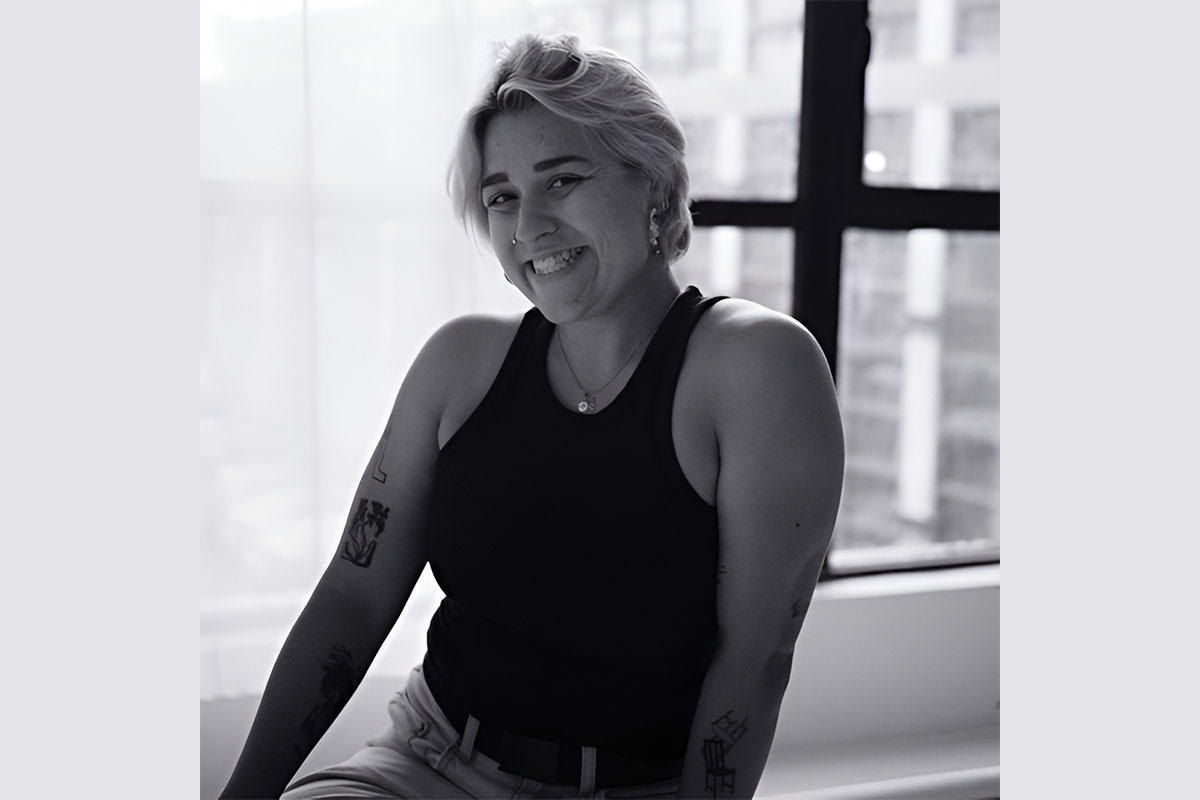
Elena Marinova dreams big. Balancing the roles of dancer, choreographer, and cultural entrepreneur, the young Bulgarian contemporary artist is developing Dance Frame Collective – an NGO with its own festival, residency, podcast, and educational programmes aimed at helping emerging artists become more visible and find their professional path.
Although Marinova resists tying herself too closely to ideas of nationality or cultural belonging, she still hopes Bulgaria can grow into a place that attracts inspiring people, artistic exchange, and significant dance events.
Elena, you are a choreographer and performer, and at the same time an entrepreneur. How did you end up combining so many different roles?
My main focus is being a choreographer: that’s what I want to do the most. Organising, programming, and curating came from a need, because I wanted my work to be presented and to be viewed, but when you’re a young artist coming from the Balkans, your pieces are not easily selected and you cannot go to bigger platforms if you don’t have support from partners. The first thing I wanted was for something to happen in my city. So in order to create this context around me, I started creating my platform.
When and how did it happen?
It started in 2019 – I was 18 – with an educational programme that we call Dance Frame Residency. It’s been happening every summer since then. But after graduation from Trinity Laban Conservatoire of Music and Dance in London in 2023, my focus shifted to building something that creates a network.
That year, we created a podcast for freelance artists, then Dance Frame University, which is a programme for people from Bulgaria who want to study dance. We support them by choosing a university, helping them to write applications… Also in 2023, I established my project-based company, Head Under Water Dance Company.
Can you tell me more about Dance Frame’s recent development?
2024 was the first year for the Dance Frame Festival. We started it with a focus on networking, for young choreographers only. For the first two editions, I didn’t have a big budget, so I invited mostly artist friends. The networking happened a lot through movement because participants had a week-long period to do research together. For the second edition, this year, we also invited some programmers who are based in Bulgaria, but this time most of the artists were international. Next time, I really hope that we can also invite international programmers, but that’s up to the budget.
In 2026, we also created the first edition of the Dance Frame Writing Academy, an academy for non-professional writers, which is hosted by an alumnus from Springback Academy, Kosta Karakashyan (Springback Academy 2020).
In your opinion, how can business tools be helpful for the performing arts?
It’s crucial for art to be business. For me, art is business. That’s why, I hired a business coach when I started in 2019, and I’ve been working with her ever since. Each year we meet and we talk about how the business side is going. Also this year, I’m starting a Master’s degree in cultural economics and entrepreneurship. I do believe that we cannot just live on hopes and passion. We need money. We must have a business plan.
What do you make of the common idea that art is primarily an act of creation and inspiration?
Of course, don’t skip the artistic part and don’t remove the actual value of the art. But you need a strategy on how to find an audience and how to have consistency in your team. Because if you don’t have a sustainable group of people around you, you cannot do it.
A good example of this approach in Bulgaria is Derida Dance Centre, a centre for contemporary dance I also danced for. It was started by Atanas Maev and Jivko Jelyazkov. Jivko is the artistic part of the organisation, Atanas is purely business. And you can see they succeed in their way. Everyone else is one person doing two jobs. But I’m not saying having two people is easier, because Atanas does a lot of work: his job is to go and network.
My job is to create a piece, to tour, and to network on top of that. And my plan, my wish is to not be both administrator and businessperson some day. I want to be an artist. I want to be the artistic director.