

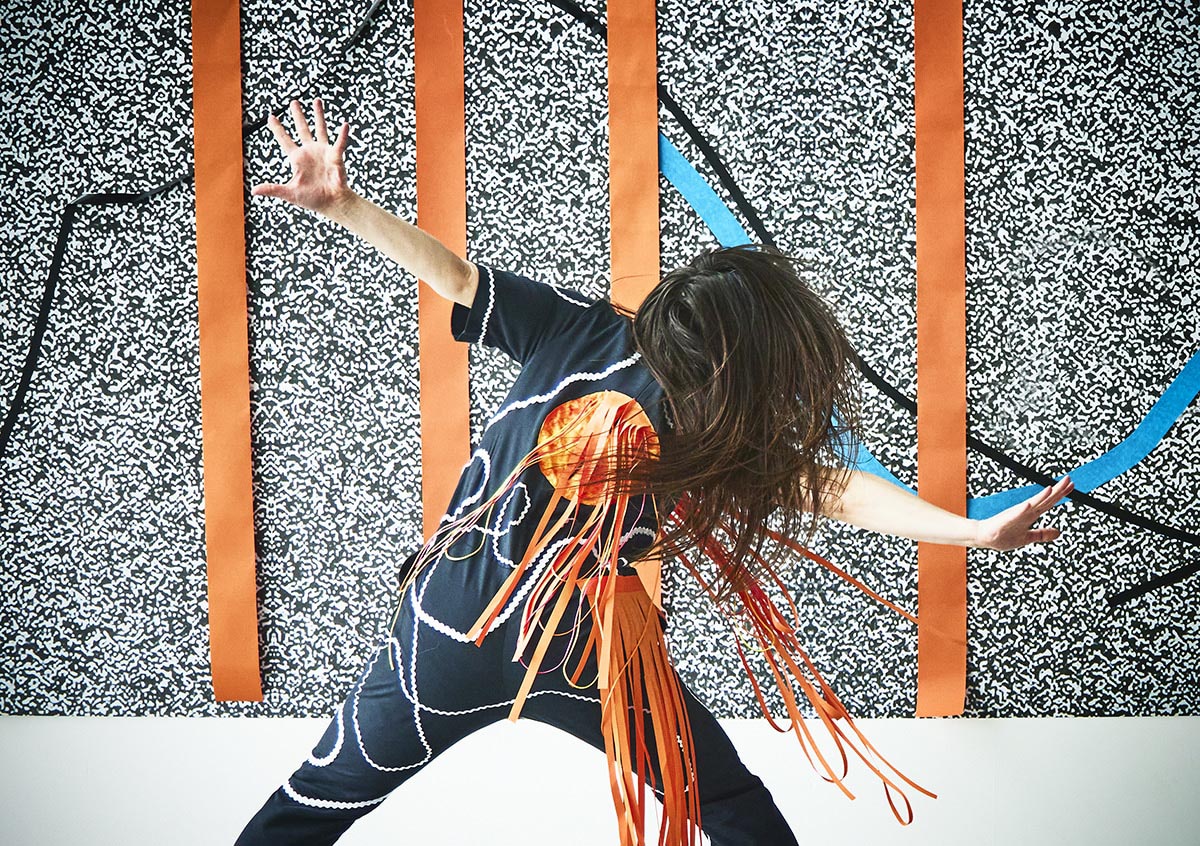
Since 2002, Dublin Dance Festival (DDF) has heralded the summer with a wide array of international and national performances, workshops and showings in theatres, studios, streets and parks throughout the Irish capital. From its inception, DDF was ambitious, bringing international artists like Jérôme Bel, Akram Khan, Mark Morris and The Forsythe Company (to name a few) to Irish audiences for the first time, making it a seminal event in the dance calendar. The curation has also focused on showcasing the best of Ireland’s dance artists and has provided participative activities to involve the general public.
Within the Irish context, the role of DDF cannot be underestimated. The festival offers a temporary concentration of practices that might otherwise remain geographically dispersed, placing Irish artists in dialogue with international peers while creating space for audiences to view world-class performances and participate in the practice of dance. The resulting conversations, whether they be formal, whimsical or aesthetic, often extend well beyond the festival itself. The 2026 edition didn’t disappoint. From 30 April to 16 May, Dublin’s theatres, streets and clubs pulsed to the rhythm.
International performances
Several of international performances at the festival have already been covered in Springback Magazine, so let’s just dip our toes in these waters to test the temperature.
The festival launched with the 50th anniversary tour by Les Ballets Trockadero de Monte Carlo, whose drag-inflected ballet parody remains a sophisticated critique of classical virtuosity and gendered performance codes. The two performances took place at the Bord Gáis Energy Theatre – a festival partner since 2025 – which represents a major shift in terms of audience reach. As Ireland’s largest fixed-seat theatre, with capacity of over 2000, Bord Gáis attracts a multiplicity of event-goers, thus amplifying the national dance footprint.
Other international performances included Christos Papadopoulos’s My Fierce Ignorant Step (a masterpiece of rhythmic accumulation, covered here), Italian choreographer Silvia Gribaudi’s Suspended Chorus (challenging standard ideas of beauty through humour while turning the audience into a participative chorus rather than passive witnesses, and covered here), PUFF by Alice Ripoll and Hiltinho Fantástico (introduced a Brazilian perspective shaped by urban social dance vocabularies, covered here) and the Spanish LaCerda with The Dance of La Zurda (which brought choreography into civic space, emphasising participation and collective encounter).
Irish premieres
The festival presented world premieres by three of Ireland’s most prominent choreographers. The pieces, while very different in concept and execution, show that Irish contemporary dance creation and scenography is in rude health, capable of holding its own against international titans like Papadopoulos and Gribaudi.
Storm 1.0 by Junk Ensemble
Junk Ensemble’s latest work opens before the performance has even begun. As the audience enters, two figures in dark overalls appear to be stagehands finishing up the set. Only gradually does it become clear that these are the performers themselves, Amir Sabra and Imogen Alvares. Framed by translucent plastic curtains and clumps of plastic sheeting with a half-finished chrome scaffold in the centre, the stage presents a bleak, dystopian landscape underscored by a menacing soundscape rumbling in the background.
The action begins with the dancers marching through smoke and shadow while assembling the scaffold, generating an atmosphere of uncertainty and tension. The choreography suggests survival in a hostile environment, with jerky, anxious gestures and expressive facial reactions conveying fear and vulnerability. The scenography, lighting and soundscape work seamlessly together to create a compelling theatrical world.
A dramatic shift occurs with the arrival of tuba player Les Neish, discovered beneath sheets of plastic and dressed in a bright scarlet-and-gold uniform. His appearance provokes laughter from the audience, although the comic tone sits uneasily within the production’s otherwise sombre aesthetic.
The most memorable dance passage belongs to Alvares, whose powerful solo sees her battling both the plastic sheeting and her apparent fate. Elsewhere, however, the choreography struggles to match the richness of the production’s theatrical elements. Sequences of scaffold climbing, tent manoeuvring and prop handling often overshadow the movement itself.
Towards the end, cable ties drop from above and the dancers attach objects (a rusty tuba, a piece of scaffold, a portable fan, etc) which are then suspended in mid-air. Debris begins to fall on the stage and the movement of the dancers becomes more aggressive, faster, more desperate – dancing for their lives perhaps. The soundscape gets louder and more dysphonic, lights flash, and then it’s over.
Denis Clohessy’s score remains a notable strength throughout, and Stephen Dodd’s lighting design provides coherence and visual depth. While visually inventive and atmospherically impressive, the piece ultimately places too much emphasis on stagecraft and too little on dance as a vehicle for emotional communication.
Note: This review was based on a preview performance
The Fifth Sun by Mufutau Yusuf
The Fifth Sun, Mufutau Yusuf’s first full ensemble work for Ireland’s national dance company Luail (following the co-choreographed Chora from 2025), is a striking and visually compelling work that showcases both his choreographic ambition and his ability to command a large-scale ensemble performance.
The piece unfolds in an atmosphere of ritual and mystery. The audience enters a dark, smoke-filled, empty stage. Very slowly white-robed figures populate the space until eight are lined up at the back. The ninth dances around and touches what appears to be a totem, a tall rectangular pillar at one side of the stage. The minutes pass as we hear a soundscape of what seems to be people walking around in an old, empty house.
In time, the line of dancers remove their robes to reveal white pants and white shirts. With their backs to us, one by one they slowly begin to move in situ, hunched over, trembling and shaking like old men. Then the line begins to move slowly towards us, like zombies in a trance, still with their backs to us.
Some of the most memorable passages occur when the performers move as a fluid collective, sliding, crawling and writhing in slow-motion unison. Yusuf skilfully balances individual expression with group cohesion, allowing solos and duets to emerge organically before dissolving back into the larger ritual, energised by the rising volume and beat of the soundscape.
Towards the end, the soundscape returns a tempo, the dancers change into flesh-coloured bodysuits, they stand, crooked, hunched at the back of the stage with their backs to us again. Then they all turn and walk to the totem. A bright triangle of light floods the stage, as if a door had opened behind. One of the dancers walks through this light and returns, cradling a long pillow (a lost loved one?). One by one they slowly go into the chamber of light and walk out with their pillows to the front of the stage. They pile on top of each other, lying in a soft, warm, orange glow. An echo of what sounds like a traditional Irish lament for the dead (known as keening) seeps through the soundscape.
The dancers – Robyn Byrne, Jou-Hsin Chu, Clara Kerr, Tom O’Gorman, Sean Lammer, Chi Liu, Meghan Stevens, Rosie Stebbing and Hamza Pirimo – perform with remarkable precision and commitment throughout, navigating the work’s demanding physical and emotional terrain with ease. The production elements are equally impressive. Lee Curran’s lighting design bathes the stage in warm amber and pale yellow hues, creating an otherworldly visual landscape, while Tom Lane’s layered sound design – combining breath, chanting, keening and driving rhythms – deepens the work’s emotional resonance.
Occasionally The Fifth Sun tests the audience’s patience. Its deliberately measured pacing can verge on excessive, particularly at the beginning and the end, where dramatic momentum begins to dissipate. Nevertheless, Yusuf’s debut for Luail remains a powerful and evocative achievement: a richly atmospheric meditation on connection, loss and transcendence that lingers long after the curtain falls.
Soft God by Emma Martin, United Fall
Emma Martin’s Soft God for her company United Fall is a riotous, unpredictable work that embraces ambiguity. From the moment the audience enters, the performance resists convention. Dancer Jessie Thompson is already on stage, casually eating crisps and looking bored.
The stage itself is a landscape of deliberate disorder. Costumes hang from rails, debris litters the floor, and an assortment of props creates a setting that feels simultaneously familiar and impossible to place.
When the action begins, accompanied by Wayne Jordan’s recorder playing, Thompson launches into a fiercely energetic solo that is by turns seductive, playful and confrontational. Thus begins a production that could be described as a little bit of everything all at the same time, and then some more.
This visual chaos is mirrored in the eclectic musical score, which weaves together Irish traditional influences, European folk melodies and myriad instruments to create a richly textured atmosphere.
In the midst of this chaos (and there’s plenty more), we witness extraordinary performances from the eight dancers: Sloan Caldwell, Kévin Coquelard, Róisín Harten, Yujin Jeong, Wayne Jordan, Stanley Menthor, Ennio Sammarco and Jessie Thompson. There are sequences of stepping and stamping resonant of Irish traditional dancing but just as you think you know what’s going on you realise that the clacking of the hard black shoes and the flamboyant layered dresses is more reminiscent of flamenco. They put on kerchiefs and gloves, dance on the table to what sounds like a Spanish folk song, change costumes, put on masks, roll around in flour. Whether all this strikes you as dynamic or anarchic, the choreography is striking – the dancers perform with individual integrity, their movements fast, sharp and furious, occasionally leaning into the comedic and lyrical.
Yet the production’s greatest strength also becomes its weakness. As the performance progresses, the accumulation of ideas begins to undermine its impact. A late scene change with a pastoral backdrop and a piano singalong feels disconnected from what has come before. What jars is not so much the change of pace but the radical departure from the previous 60 minutes of glorious pandemonium.
Soft God was commissioned by Dublin Dance Festival and Abbey Theatre.
Let’s get physical
The enthusiasm that surrounded the activities that ran parallel to the performances was striking. One of these was a new initiative called DDF x Humanarium – a series of events in association with the Royal College of Surgeons that focused on health and wellbeing. These included a workshop for parents and babies by Katherine O’Malley, a vigorous dance session called The Shake with Laura Murphy, a mindful walk with Mary Nunan and a somatic workshop with Hélène Cathala. These events were all sold out – some immediately after their announcement, and not just within the dance community.
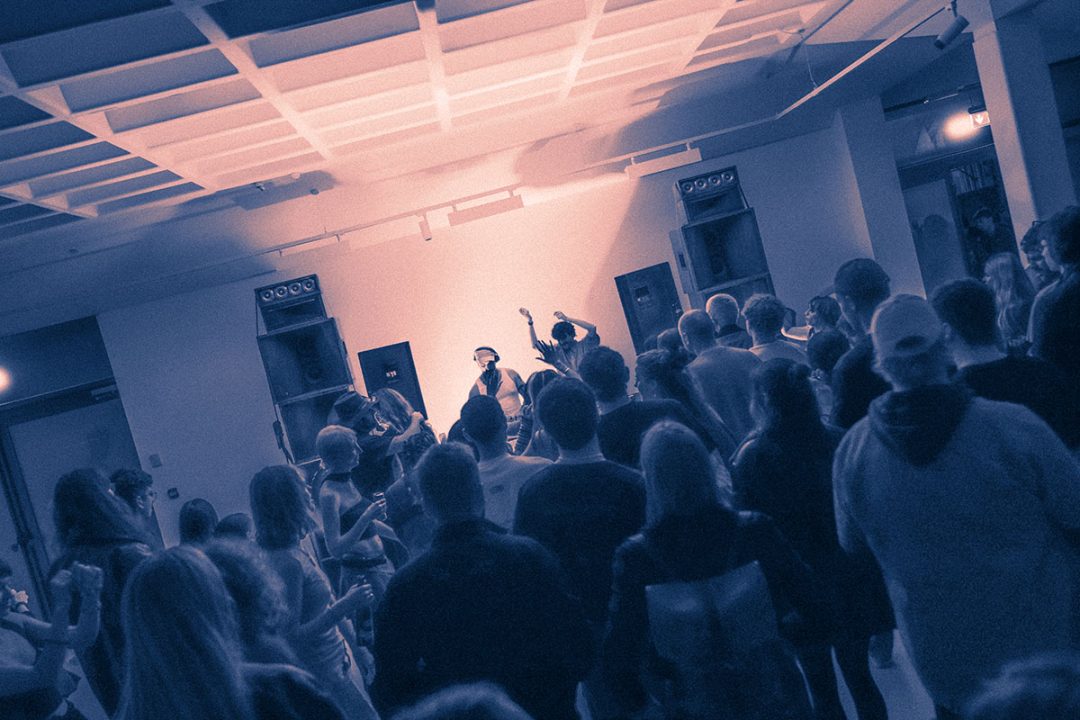
The DDF Lates at Bewley’s offered Saturday night club takeovers with DJs and guest dancers. A neuro-friendly club night was also part of the programme. These club nights were sold out and created a space for – dare I say it – the younger dance aficionados to connect and share the joy of dance for dance’s sake.
The increasing interest in these festival offerings reveals a growing curiosity about movement and dance and, ultimately, a common human desire, not just to watch but to connect, participate and share. Papadopoulos could make a new work based on this accumulative impact, methinks. I know Gribaudi would approve. ●
30.04.2026–16.-5.2026, Dublin, Ireland