

The Athens & Epidaurus Festival takes place throughout the summer and has become an important meeting point for theatre and dance audiences. This year brought a change in the Festival’s direction, with theatre director Michael Marmarinos taking over as artistic director.
The dance programme brought together artists and companies from Europe, China and the USA, as well as Greek choreographers. I watched several performances throughout June and July, starting with Badke (remix) by Palestinian artists Ata Khatab and Amir Sabra. From there, the programme moved between very different ideas of what dance can be, from collective endurance and political visibility to questions of discipline, presence, tradition and violence. What remained with me was less a common theme than a series of questions about what we expect from dance, what we look for in a performance, and what a festival chooses to make visible.
Ata Khatab and Amir Sabra’s Badke (remix) by revisits Badke (2013) by Belgian artist Alain Platel, which was presented at the 20th Kalamata International Dance Festival in 2014. Ten dancers (nine on the day I attended, due to an injury) sustain a vibrant, relentless rhythmic pulse, moving through Arabic musical traditions and Eastern dance forms that intersect with contemporary dance and street styles. The group remains at the centre, while individual dancers step away into solos, duets and trios before returning to the collective flow. Colourful everyday costumes – reds, pinks, browns and whites – reinforce the celebratory mood. The dancing is physically exhausting, and at times the music swells or suddenly recedes, shifting the atmosphere into something tense, as though anticipating an imminent catastrophe. Dogs barking fill the soundscape; dancers collapse, seemingly unable to move, only to rise again and return to the relentless beat. By the end, nothing seems able to stop them from celebrating life again and again.
The performance’s political force cannot be separated from the fact that it is created and performed by Palestinian artists today. The visibility of Palestinian choreographers on international stages is, in itself, urgent and necessary. The dancers’ commitment is exceptional. If that exhaustion mirrors the reality of Palestinian life today, then perhaps the more difficult question is not what the work says about Palestine, but what its reception says about us. Is visibility enough? If we leave the theatre convinced that we have witnessed resilience, have we done enough? Or have we simply found another way of consuming catastrophe through art?
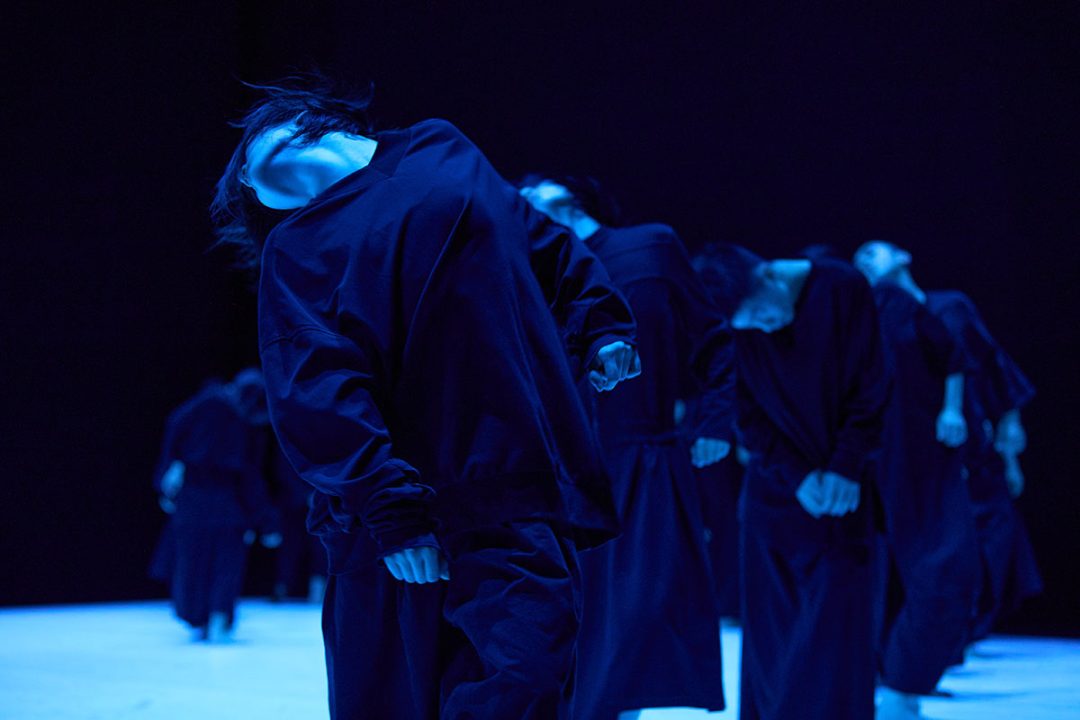
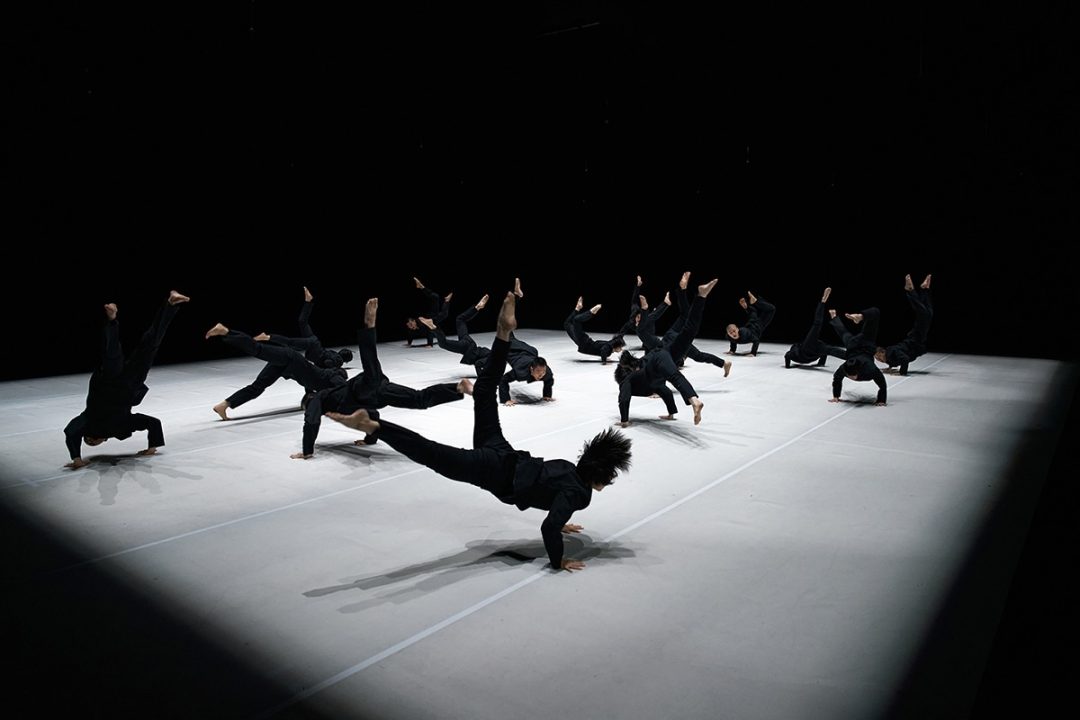
TAO Dance Theatre, a company from China that performs regularly in major European venues, presented two connected works, 16 and 17, whose titles refer to the number of performers on stage. Dressed alike in dark, loose-fitting clothes and matching haircuts, the dancers form precise lines, moving their bodies – and especially their heads – in continuous circular motion. At first, the choreography creates striking images reminiscent of DNA strands. The dancers’ discipline and synchronisation are remarkable, reflecting Tao Ye’s signature Circular Movement System. Yet I found myself admiring the performers more than the choreography. The repetitive movement vocabulary and relentless rhythm gradually raised questions about this highly disciplined vision of the body. 17 moves the dancers to the floor, combining abrupt movement with breath and vocal sounds, again through absolute synchronisation and precision. Even their bow at the end is completely uniform, making the whole experience somewhat intimidating in the way it leaves so little space for difference or deviation.
Deborah Hay’s No Time to Fly (2010), the foundation of her Motion Bank project, was one of the highlights of the Festival. More than a historical work, it reminded us how a generation of choreographers redefined what dance can be – not through virtuosity or spectacle, but through presence, attention and the relationship between the body and its surroundings. A body that breathes, waits, oscillates and takes its time. Watching Hay perform this solo was moving, not simply because we were witnessing a legendary artist or an iconic work, but because it still speaks to the present. The piece proposes another way of dancing and, equally, another way of watching. It asks for awareness rather than interpretation, attention rather than explanation. Instead of leading the audience towards a specific meaning, it creates the conditions for each person to experience the work in their own way. Soft hands, precise movements and an extraordinary sense of presence were enough.
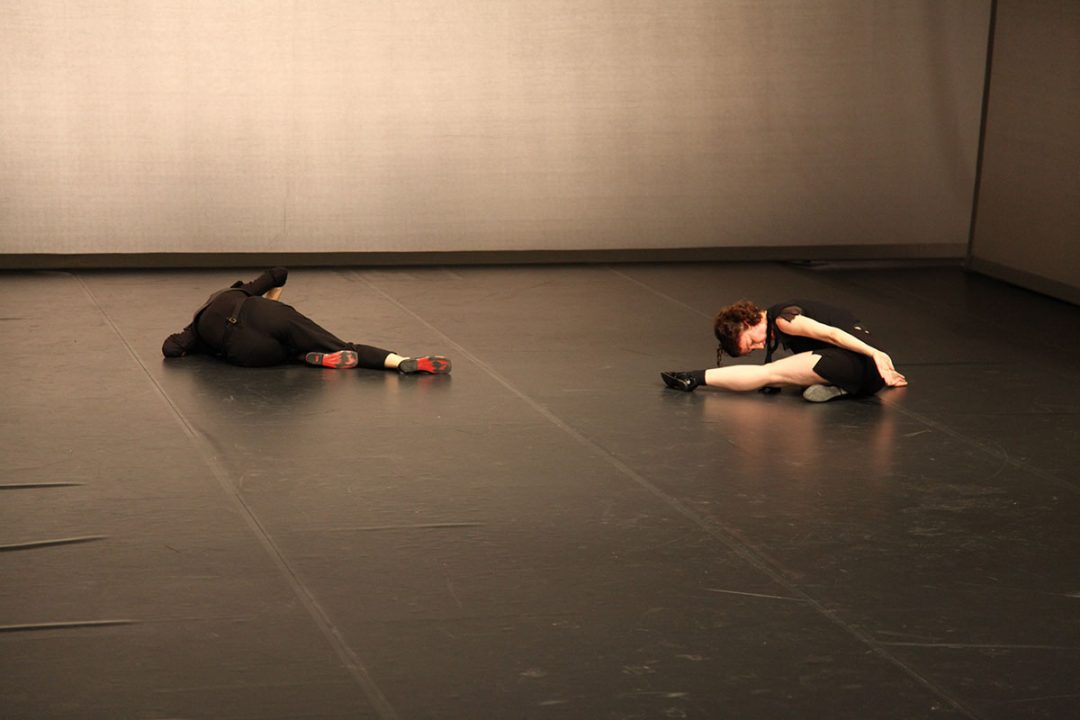
This openness became even more evident with As Holy Sites Go (2011), performed by Jeanine Durning and Ros Warby. Based on the same score as No Time to Fly, the duet unfolded as an entirely different choreography, much more comical in some parts, showing how Hay’s scores can become different works in different bodies. Earlier that day, the performance-lecture ‘No Time to Fly – Documentation Center’ by Laurent Pichaud and Myrto Katsiki had introduced us to Hay’s working methods and the open questions she uses as a starting point. It also presented Katsiki’s new Greek translation of Hay’s Using the Sky, a book that now has a place in my library.
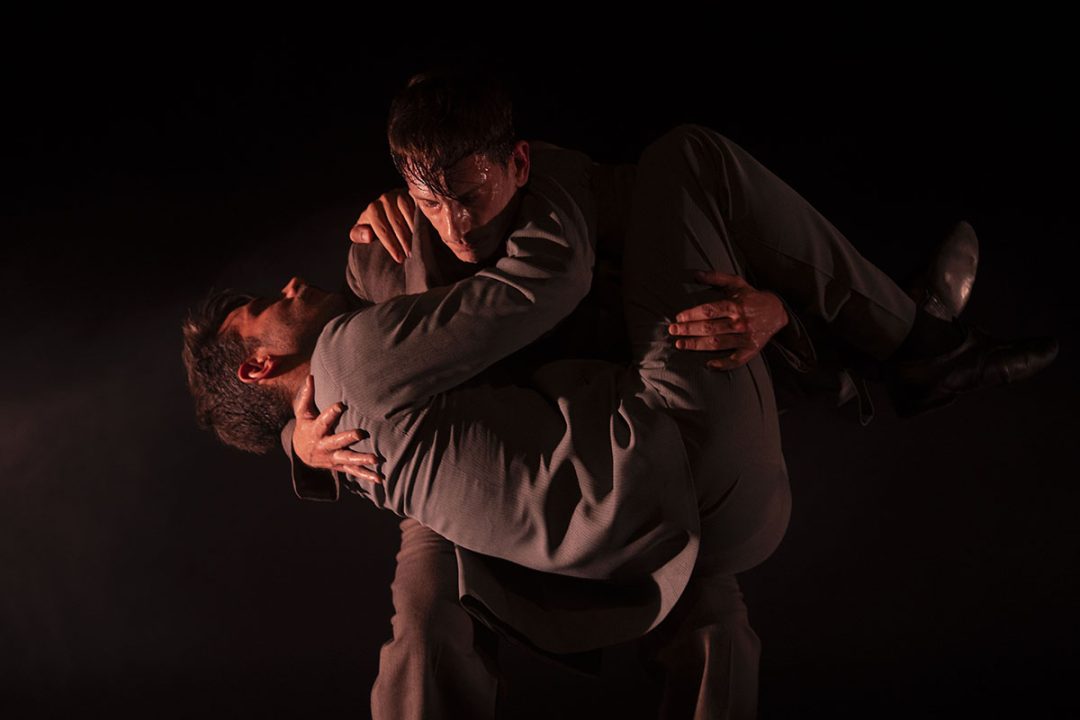
Among the Greek performances I attended, Nod by Alexandros Vardaxoglou draws on the biblical story of Cain and Abel and the first fratricide. Vardaxoglou and Yiannis Tsigkris (replacing an injured Nontas Damopoulos), both suited, share the stage with an otherworldly wire tree. Yellow light emerges from the background as they begin a tango-like duet, circling one another. The choreography is built around vigilance, confrontation and recurring scenes of violence. At times the intensity is such that some scenes could benefit from a trigger warning. The work relies on a limited choreographic vocabulary that soon begins to repeat itself. Control constantly shifts from one performer to the other, reinforcing the central metaphor without allowing it to develop much further. The performers’ physical endurance is impressive, but it is not enough to sustain the dramaturgy. At a time when violence, particularly against women, has become a constant presence in the Greek news cycle, Nod recalls a reality that already feels painfully familiar. Yet if violence has become part of our everyday reality, what does art offer by reproducing it? Without opening another way of seeing or thinking, the stage risks becoming another site where violence is replayed.
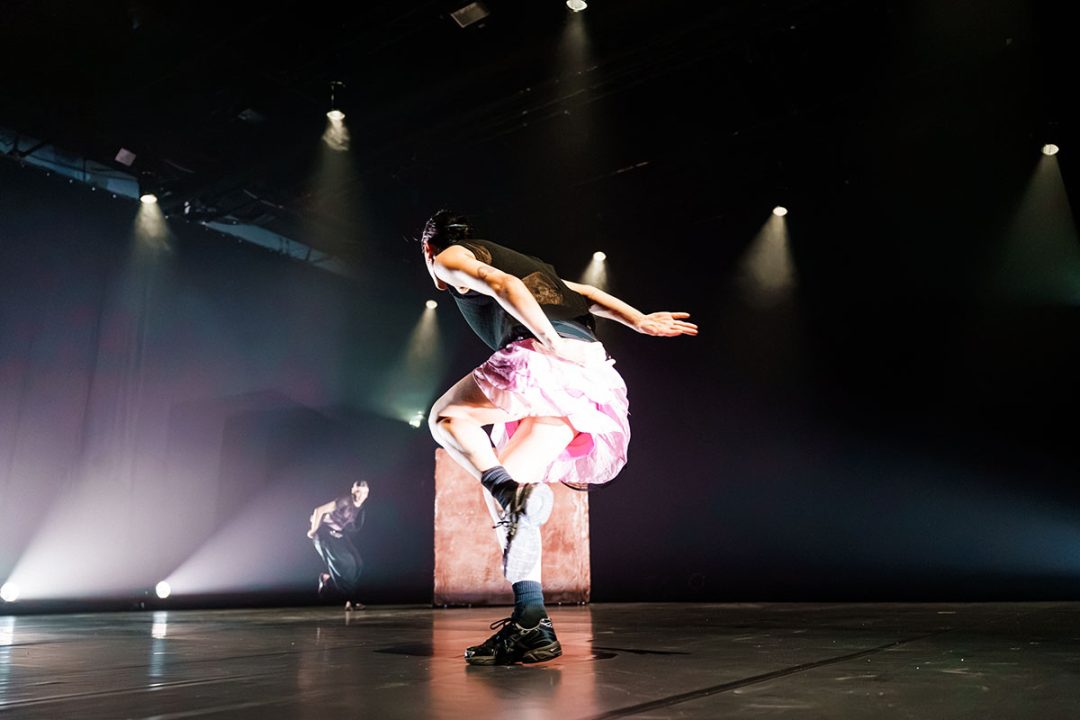
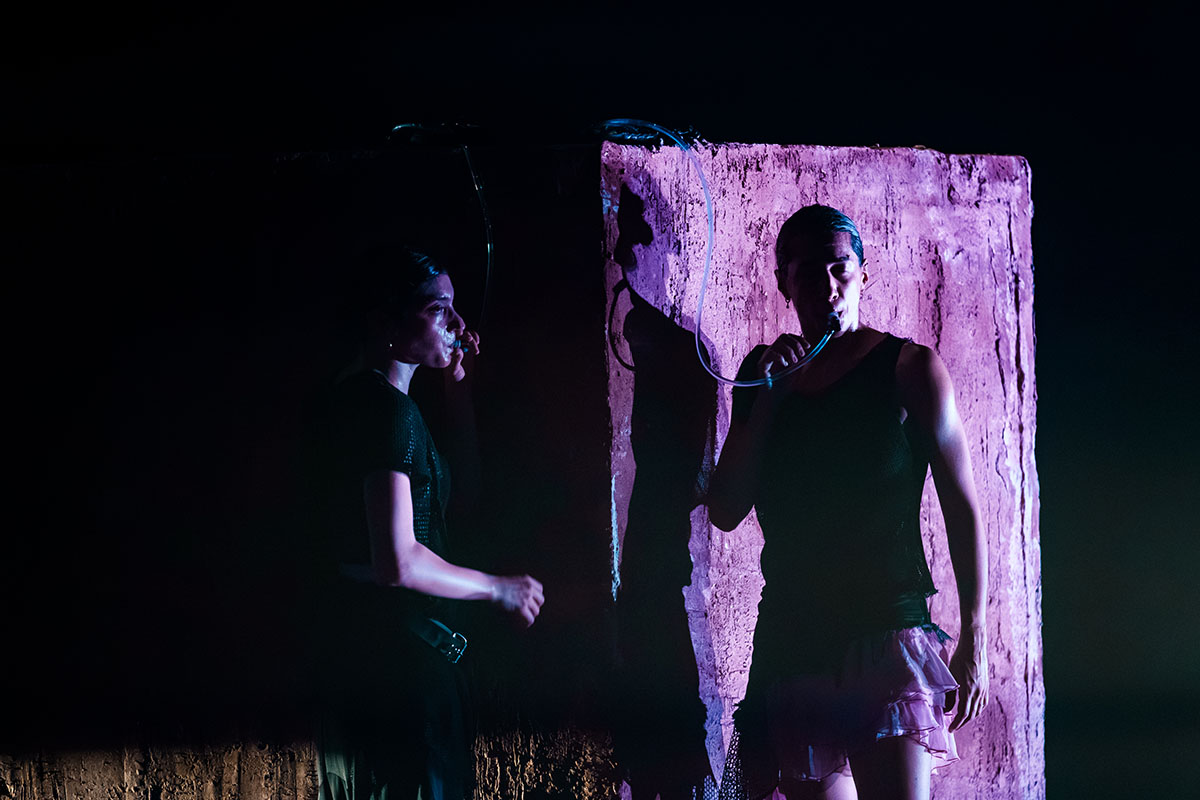
When Did Silence Get This Loud? by emerging choreographer Zoe Efstathiou is a duet performed by herself with dancer Evini Pantelaki. A wooden cube remains the main scenic element throughout. The work aims to create a multisensory experience through changes in lighting, music and movement. The performance begins with Pantelaki dressed in black, with a slight punk look, moving through the space in small, abrupt movements and short steps. Efstathiou gradually joins her, and the two move with precision and energy, sometimes in unison and sometimes apart, and their physical presence is engaging. At times they are accompanied by music, while at others the stage falls silent. Lighting constantly changes, coming from different sides and at times illuminating the floor. While the choreography moves through a series of scene and ideas, the sequence and transitions often feel arbitrary. At one point the dancers stop to drink water from small tubes hanging above the cube, while towards the end audience members gradually join the stage and dance with the performers. These moments create surprise, but they never fully come together into a coherent whole. As the performance progressed, its direction became increasingly unclear, and by the end it was difficult to understand what had actually happened.
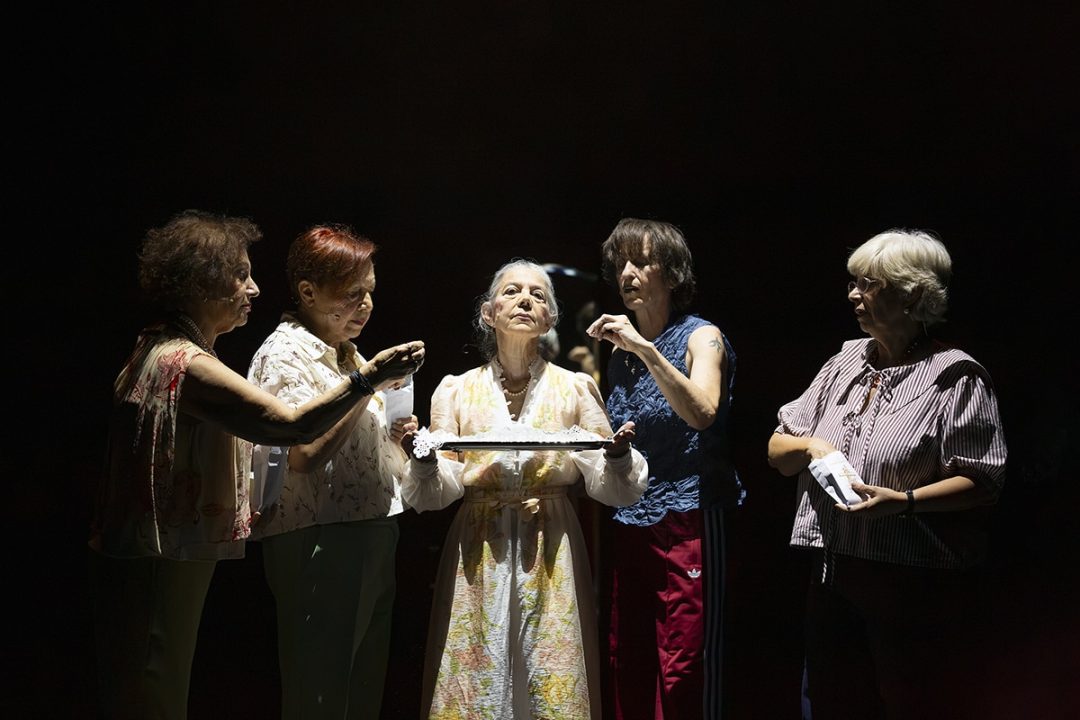
Koliva by Christiana Kosiari leans more towards dance theatre, drawing on Greek mourning traditions through the ritual of preparing koliva. Five women – two professional dancers and three non-professional performers – share stories of grief, memory and loss. Old chairs, tables, hanging fabrics and plastic containers become stage elements as laughter and everyday gestures gradually give way to the revelation that one of the women is already dead. Greek and English surtitles accompany the performance. Seeing non-professional performers on stage brings warmth to the work, which evokes memory, bonding, nostalgia and mourning. Yet rather than probing the emotional or symbolic complexity of the ritual, the performance seemed content with presenting a familiar Greek custom, as if explaining a tradition rather than transforming it into a more layered artistic experience.
This year’s Festival seems to be looking for a more multivocal approach to the performing arts. Its Voices from the Arab World strand, which in dance included Shiraz by Iranian choreographer Armin Hokmi as well as Khatab and Sabra’s Badke, is one example of this direction. The wider dance programme also brought international companies, such as TAO Dance Theatre from China, together with Greek choreographers. Yet I missed a clear sense of the Festival’s own vision of a multifaceted dance scene: what kind of dance does the Festival want to support? What does it want to bring to its audiences that they would not otherwise encounter? This programme, bringing established international names together with Greek productions which had sometimes already received support from the Ministry of Culture, felt safe, as if there was little at stake in the selection.
Perhaps this is why the title When Did Silence Get This Loud? stayed with me beyond the performance itself. The Festival brought together many voices, countries and approaches, but does this in itself create diversity, or even an interesting conversation? For me, the programme lacked a stronger curatorial choice: a sense of what kind of dance the Festival wants to present, support or take a position on. ●
07.2026 Athens & Epidaurus, Greece