

INVENTORY
Item 01: The Abstract Liver
Item 02: The Ambient Gland
Item 03: The Swallowing Tract
Item 04: The Phantom Bile Bag
Item 05: The Offal Pile
Main material: Polyurethane foam. Resilient to tearing. May be mistaken for a toy. Handle with care. Do not consume.
Item 06: The Body
Main material: Soft tissue. Limited shelf life. Highly responsive to pressure. Conforms to stress and repetition. Subject to hunger, desire, disgust, discipline and correction. Cannot be replaced.
Related: The Squishy
Food-shaped. Organ-shaped. Designed to be pressed repeatedly. Slowly returns to its original form.
Scroll enough through Instagram or TikTok and you can’t miss them: countless reels featuring hands squeezing a bar of foamy butter, a jelly piece of fruit, a glittery dumpling. Then letting go and as it slowly recovers, pressing into it again. And again. Squishy ‘anti-stress’ toys have become a trend among kids and adults, who hunt and collect them, sometimes to obsessive lengths. There is something deeply satisfying and comforting in the tactile experience that these malleable objects offer: deforming a familiar shape, but without consequences. It will always recover its original shape. Nothing breaks, nothing bruises. It gives way and springs back.
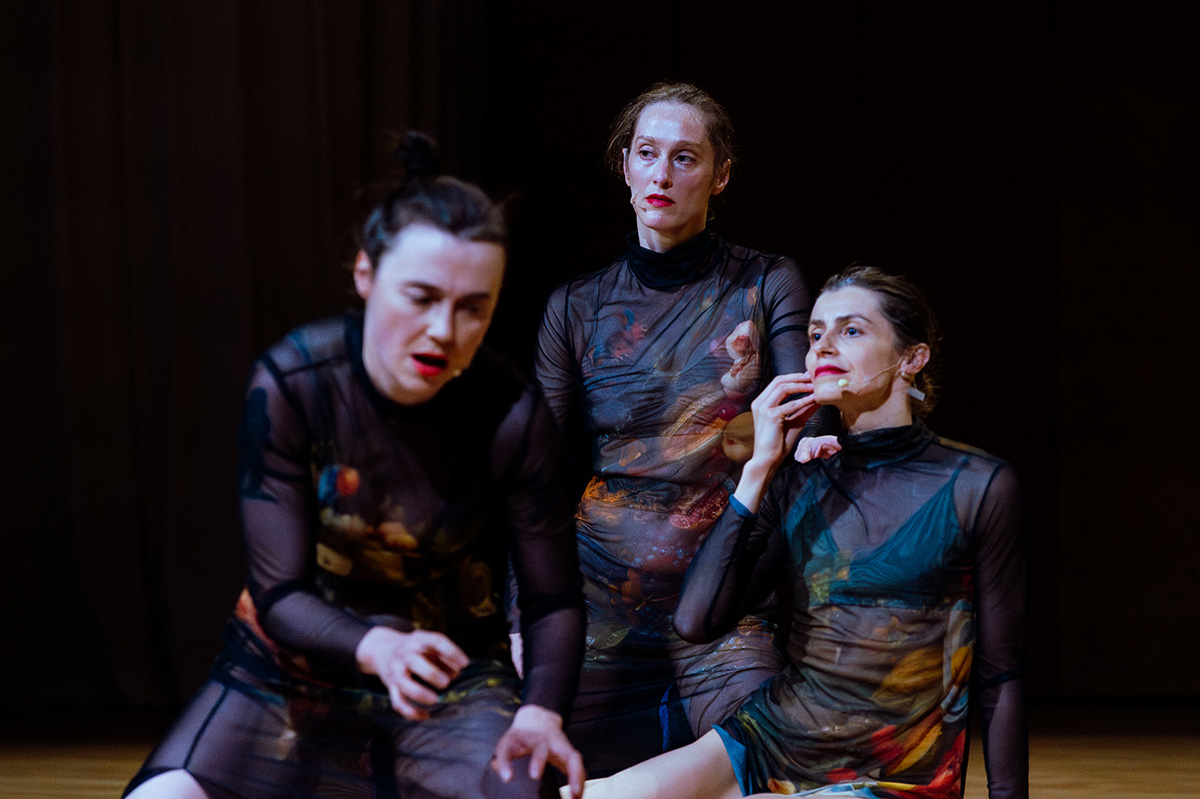
The props in Ramona Nagabczyńska’s CLEAN distress this familiar pleasure: at first glance they look like pinkish, glossy soft toys, but soon become harder to place. A gathered mound of hardly identifiable but alarmingly familiar shapes. The squishiness is there, but their shapes suggest things that shouldn’t be available for squeezing. A liver, perhaps. A gland. A piece of intestine. A heap of things that look like they should remain hidden under skin. Fittingly, they appear from inside the mass formed by the three dancers’ bodies (Karolina Kraczkowska, Ramona Nagabczyńska, Agata Siniarska). Soon, the theatre floor resembles an abstract butcher’s bench. The dancers treat them both with greed and disgust, adding to the ambiguity.
The repetitive and exhaustive choreography increasingly treats the body as a squishy toy: the dancers perform an almost punishing sequence of jumps, squats, hip movements and exercises, counting and starting again almost as soon as they collapse. Sweat and heavy breathing become part of the choreography. The movements evoke the rituals of exercise and dieting through which bodies are disciplined, measured and pushed towards an ever-receding ideal of perfection. The difference between the soft prop and the soft body is unmistakable: the squishy can absorb pressure and return to form, while the dancers’ bodies register every repetition.
The recipe that appears at the end of the performance offers a final variation on these themes. A chocolate cake is baked, burnt, and baked again, the process repeated until it reaches an imagined state of perfection: a sequence of instructions, repeated and refined in pursuit of an ideal that destroys the very thing it seeks to perfect.