

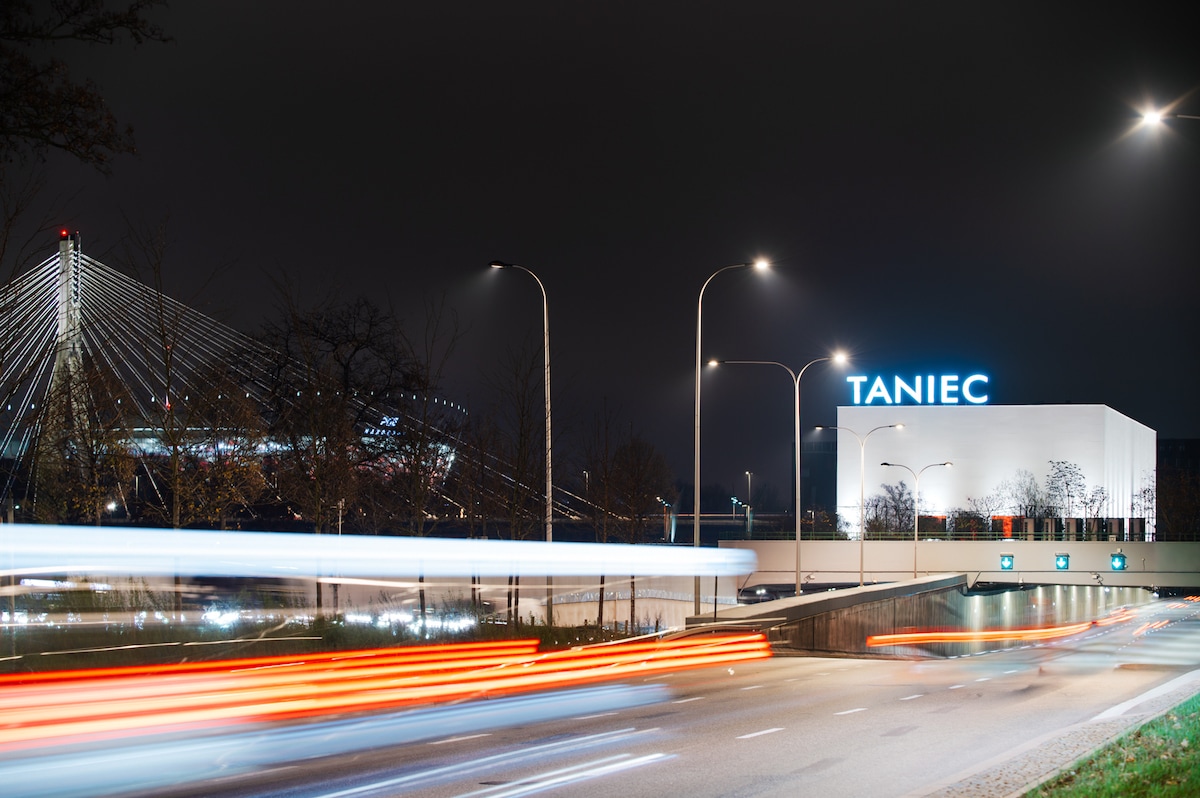
Poland – from Dance Theatre to New Dance
In 2013, Anna Królica published a compilation of interviews with the new generation of Polish contemporary dancers. In the introduction, Królica identified a certain shift – away from Dance Theatre and towards a ‘New Dance’, inspired by Yvonne Rainer and Pina Bausch. She described the contemporary dance practice as often situated ‘between theatre and gallery’, where the body becomes ‘more visual than semiotic’; ‘an object’ that choreographers would contemplate through its physicality, look at it as ‘a living sculpture, observe its reaction to tiredness and other outside stimuli, as well as how emotions and its traces are inscribed into the body’.
Królica, after Witold Mrozek, defined her interviewees as ‘Generation solo’, from which the book takes the title. The name comes from ‘Solo Projekt’, an artistic residence which jump-started careers for many. It was part of a larger programme, ‘Old Brewery New Dance’ – the first of its kind in Poland – initiated and curated in Poznań by Joanna Leśnierowska. Amongst Królica’s interviewees were artists we saw perform or met during our Assembly weekend in Warsaw: Maria Stokłosa, Weronika Pelczyńska, Karol Tymiński, Ramona Nagabczyńska, Renata Piotrkowska-Auffret. These choreographers wanted to break away from the Polish theatre scene; they wanted dance to be perceived as a medium itself.
Is locality coming back?
What further unites many of the dancers interviewed by Królica is a shared experience of moving abroad. Some returned to Poland full time; others work both here and abroad. As Renata Piotrowska-Auffret, the curator of the newly established Dance Pavilion in Warsaw, told us, under socialism there was little possibility for dancers to experience the booming western contemporary choreography scene. This changed after 1989: with the fall of the Iron Curtain, trans-European mobility began to take place. The excitement reached its peak once free movement was allowed by the EU’s 2004 enlargement. Finally, dancers could go west and begin to interact with other modern currents.
But more than twenty years later – and over ten years after Królica’s book was published – the initial excitement with the west is slowly giving in to disillusionment. People across artistic, cultural and academic fields are noticing how, in the dominant western paradigm, eastern Europe’s post-socialist locality often succumbed to the globalised, late-capitalist modernity that doesn’t allow for alternatives. Today, a new challenge arises: how do we learn to find our own voices that could counter or shed new light on such monolithic narratives?
After participating in Nowy Teatr’s Generation After showcase, as well as the Polish Dance Platform in Wrocław, I can safely say that dancers today are amazingly productive in seeking answers to this question. In her recent article, Marcelina Obarska defines in six terms what interests contemporary Polish choreographers: queerness, fluidity, language, body art, going against oppression, more-than-human, and co-relations. Below are a few examples of how performers are taking these concepts to carve space for practices embedded in the Polish or broader eastern European context – a context full of difficult but exciting contradictions. Their moving bodies reinscribe tradition and history into present politics.
Why context matters
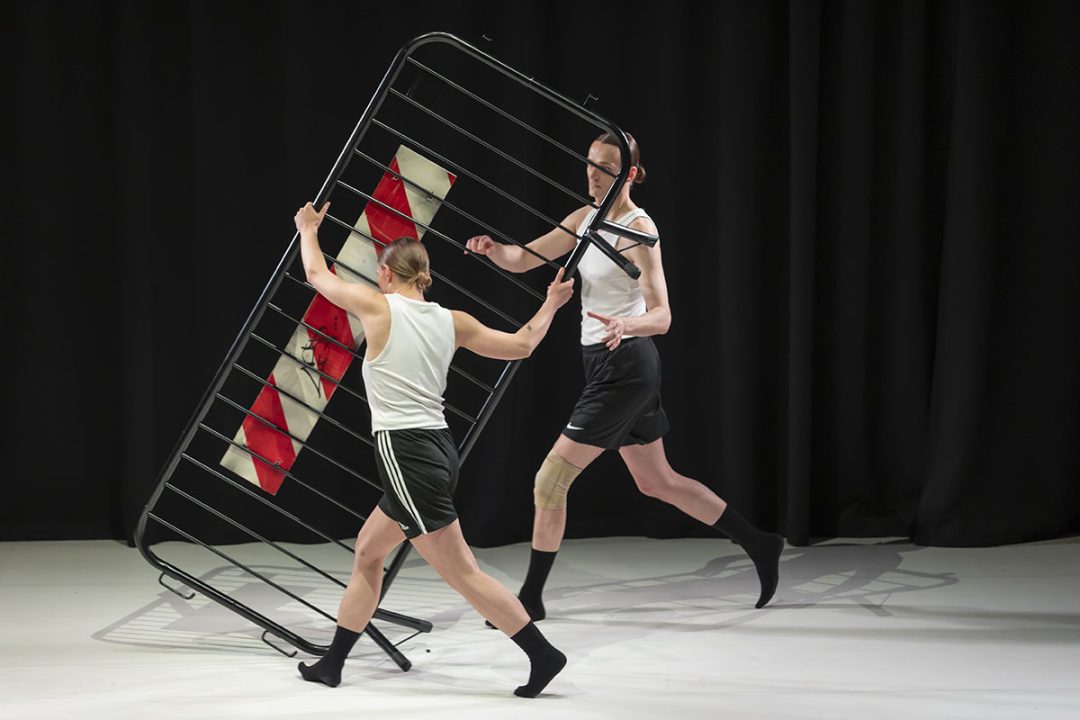
Perhaps the most illustrative performance is CLAP & SLAP by Agnietė Lisičkinaitė (Lithuania) and Igor Shugaleev (Belarus/Poland). The two artists skilfully tackle the most pressing subject in eastern Europe (and arguably the whole continent): Russia’s full-scale invasion of Ukraine. What stands out is the movement they develop – a continuous clapping that soon turns into a self-flagellating act of hitting oneself in the back. Such a choreography, rooted in the Catholic guilt experienced across the region, almost attacks the audience on an affective level; the impossibility of expressing the pain and hopefulness verbally is transposed onto the body. This, in turn, allows for a cathartic transgression, breaking an impasse that many experience when trying to verbalise their fear and outrage. These negative feelings are turned into a productive rebellion against passivity over Russia’s imperial efforts.
Carving a space for local expression that revolts against dominant politics is also the preoccupation of Wojciech Grudziński’s Threesome. Grudziński evokes the spirit of three legendary Polish ballet dancers who lived under socialism: Stanisław Szymański, Wojciech Wiesiołłowski and Gerard Wilk. All were queer and faced homophobia, embedded within ballet at the time. By inscribing himself into the longer history of queer dance in Poland, Grudziński shows how the past haunts the present – and how knowing your spiritual ancestors may provide strength to carry on. Significant here is the performer’s focus on the traditional dance, oberek; by queering its form, Grudziński frees the dance from a patriotic lens and gives it a liberatory function.
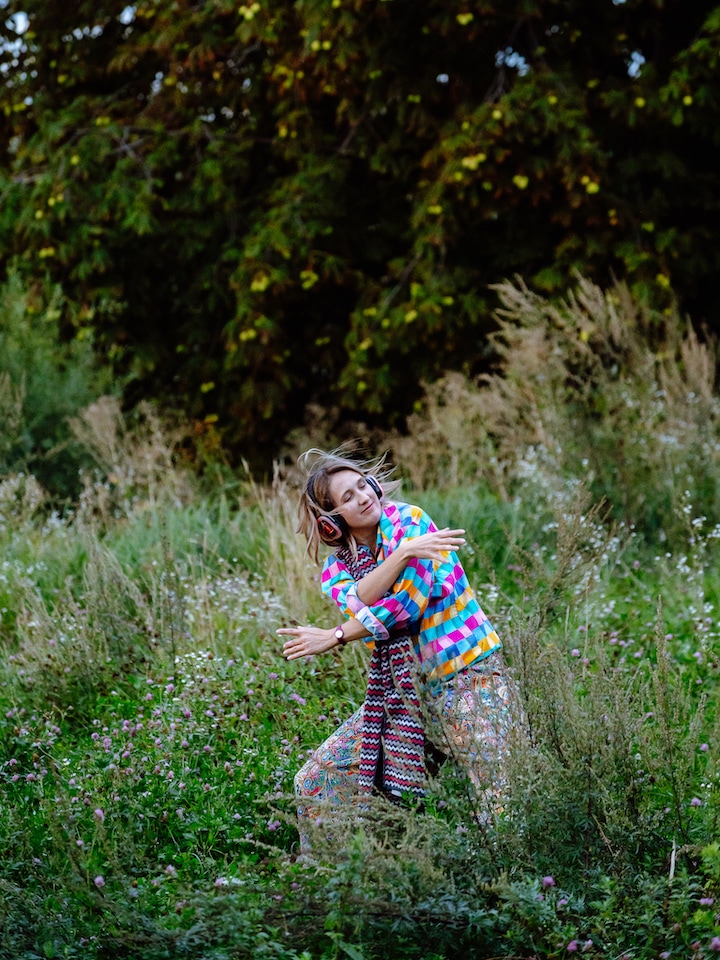
And what about local ecologies? Here, Weronika Pelczyńska’s Vistula comes to the fore. Having recently premiered at Dance Pavilion, this socially engaged performance centres on the titular river, which flows across all of Poland, from the mountains all the way to the Baltic Sea. As the river also cuts through Warsaw, the performers take the audience near its embankment. Invited to dance by a playful voiceover coming from headphones, we are asked to embody the river’s currents. Eventually, through shared movement, something else arises: exasperation with the inaction over impending climate change, which manifested last summer through massive heatwaves that made Vistula’s water levels hit an all-time low. If we think of our bodies as in direct relation to the river – after all, this is where the very water we drink comes from – might we discover a means to reckon with climate anxiety? Through such more-than-human relationality, can we find a collective energy that turns a paralysing fear into a reparative emotion?
The sculpture dances
Pelczyńska’s interest goes beyond the natural, as we found out when we attended a choreography walk in the Królikarnia sculpture park organised by the Sisterhood Practices collective (Pelczyńska and Magda Fejdasz) with Rita Twardziak, Królikarnia’s museum guide. As Twardziak told us the history of each sculpture and its sculptors, we were invited to interact however we wanted with the artworks – touch them, caress, hug, climb.
Dancer by Yekatrina Belashova, 1964. The Kiss by Maria Papa Rostkowska, 1985. Horizons by Magdalena Więcek-Wnuk, 1974. Untitled by Agnieszka Brzeżańska, 2014. These female sculptors and their artworks were the main protagonists of the day. The performative walk was at the same time a feminist lecture on women’s historical presence in the male-dominated art field.
I remember how, as we collectively placed our hands on Rostkowska’s The Kiss, I briefly had an impression that the sculpture moved. Our pulsating bodies extended it. As we merged ourselves with the marble, it became alive.
And perhaps this is the best, conclusive example of how dance (literally!) moves Polish and eastern European history into the present. Whether through seeking bodily movements rooted in the region’s culture, evoking figures from the past, extending into the more-than-human surroundings, or animating local sculptures, dance in Poland translates contemporary choreography into its own local language, charging movement with a political voice that responds to today’s challenges. The body, when imbued with locality, manifests in full force.