

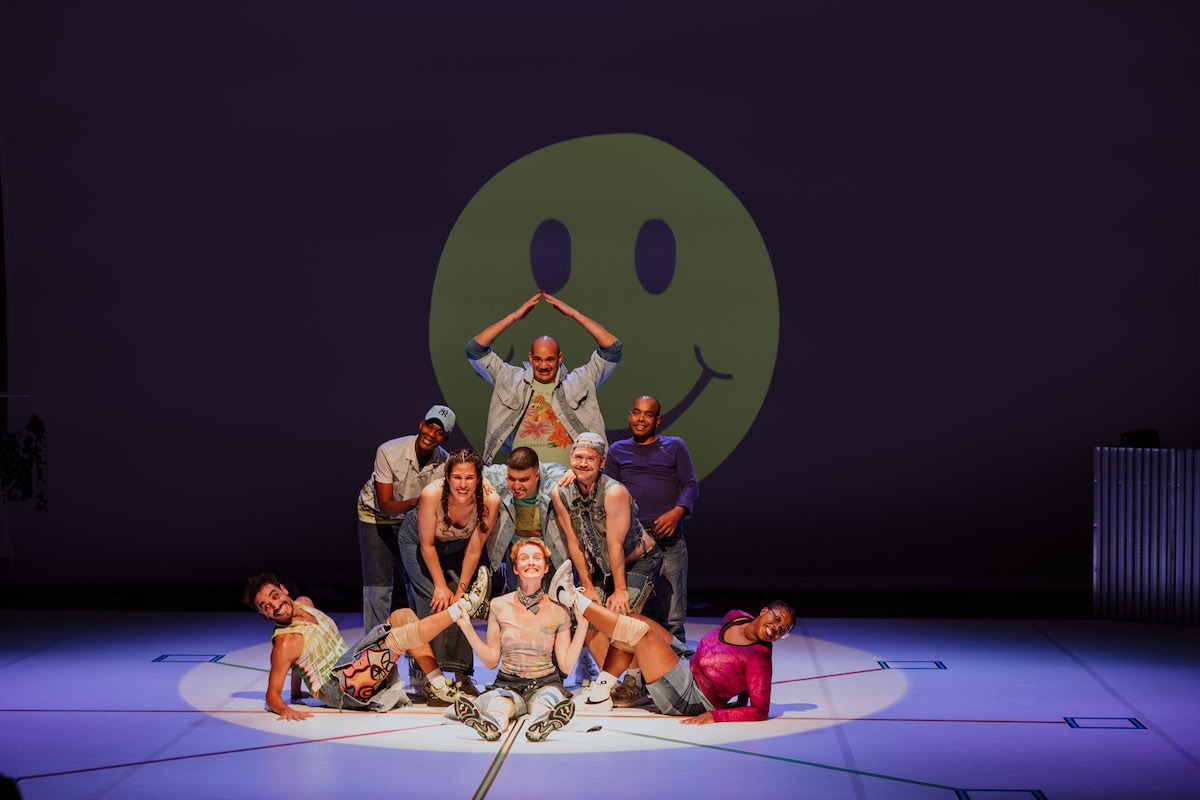
Rotterdam-based choreographer Connor Schumacher has spent more than a decade building a practice that sits between contemporary dance, club culture and social choreography. In 2025 Raging Against Various Elements, made with his independent organisation ARK, won the Zwaan for most impressive dance production, one of the highest honours in Dutch dance. At Julidans 2026, I saw his latest work, Asset, Liability & Equity, which questions the power relations society builds around talent, status and the body. The diversity of his casts and project participants reflects an inclusive artistic ideology in which everybody is invited to move.
You’re originally from the United States, but the Netherlands has been your creative home base since 2010. How would you describe your creative identity, and does where you live shape it?
In New York I followed the choreographic approach of Doug Varone, a choreographer rooted in modern dance, Limón and release technique, whom I look up to a lot still. Later, in the Netherlands, I worked with a choreographer whose work culture was very much an example of what we no longer want to support. Physical and sexual harassment, emotional manipulation, unsafe and unfair practices – the whole sack. In the end I left, frustrated, and wanted to make my own work as a complete rejection of that mindset and behaviour. The experience did at least make me ask: what is dance? Does dance mean anything?
‘
I’ve learned to disagree with the idea of non-hierarchical forms, because there is a hierarchy. It’s just valued differently now, and the drop isn’t as steep as it used to be.
How do you separate the roles of choreographer, director, dance artist, movement artist, dancer, performer in your work?
They’re like different shoes to step into. I moved from a very expressive culture in the United States into Dutch culture, which is quite reserved and minimalist, with its Protestant-Calvinist roots. So much of my practice developed as a survival mechanism in response to what the field asked: explain the essence and impact of your work, tell us what we’ll see on stage, long before you’ve even made it.
That’s how this role developed for me: standing between the work and the audience as a bridge. I let people know what to expect and how the universe in this room works. I also tell them about their agency as active observers, which relieves them of the need to understand. That’s how director, writer, choreographer, dance ambassador and activist all came to be wrapped up in me: one package that communicates on paper and on stage, poetically and with practical responsibility.
Your work seems rooted in a horizontal, non-hierarchical approach. What does that look like in practice?
I’ve learned to disagree with the idea of non-hierarchical forms, because there is a hierarchy. It’s just valued differently now, and the drop isn’t as steep as it used to be. We’ve tried to bring the artist down from the ivory tower and lift everybody else up. As artistic director, I have more perspective, but only to show direction, not to claim agency over anyone. Everybody else has their own expertise and agency, and the work only benefits from that.
Self-reliance creates stronger collaboration, as we’re constantly giving to and receiving from each other. In Raging Against Various Elements, I like to say I only made 30% of the choreography.
You’ve been interested in body politics: how bodies are shaped to fit the ideologies society imposes on them. How do you address this in your work, and which norms do you push against?
Exclusion is the norm I push against most. I come from a conservative, morally strict and dominant parenting environment, and from an exclusionary culture. So in my practice I try to create spaces where that dominance doesn’t exist, and to build a new worldview through the values of dance. I’ve experienced this in queer and clubbing communities, but it extends to other places.
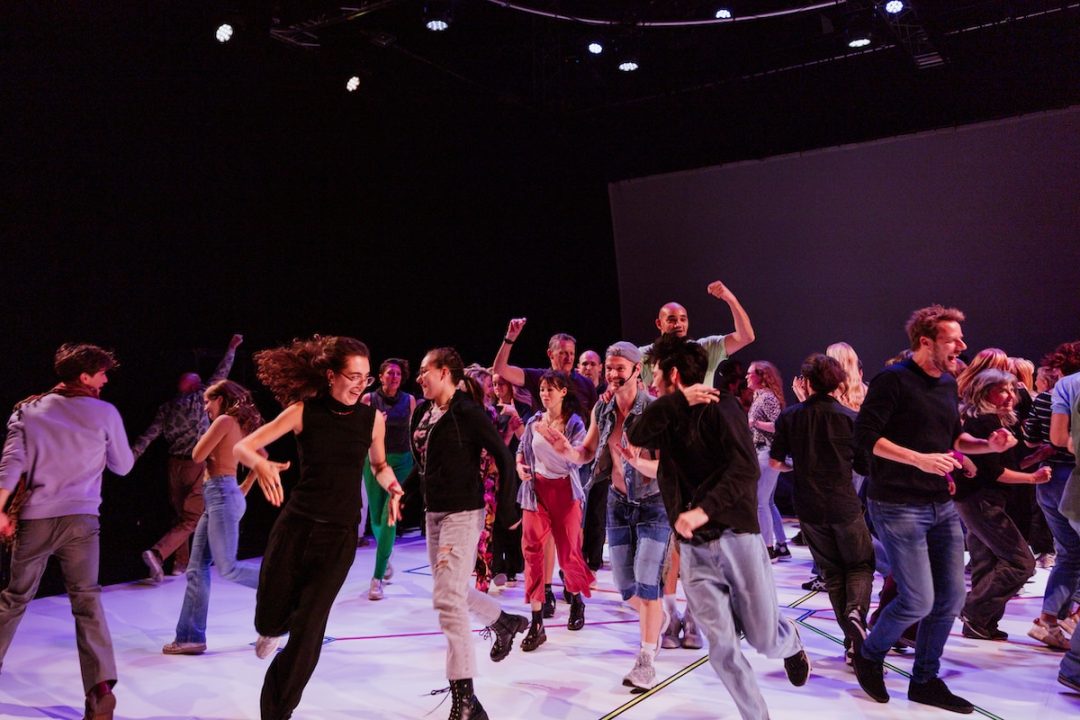
When I read George Lakoff and Mark Johnson’s Metaphors We Live By, I realised that consciousness is built from the physical experiences you take in through your nervous system. Over time, the environment, morality and culture you grow up in become part of you through those experiences. That made me think about what dance has done to my body. Certain values are tied to certain movements, so when we practise those movements we practise those values, and together they create a political, physical culture.
I choose to frame dance as a progressive human action, because dance is always trying to move the body into a better state. There we practise essential social skills: empathy, self-confidence, teamwork, negotiation, appreciating differences, dealing with uncertainty. On a dance floor you’re constantly negotiating space with others: letting someone pass, reaching out a hand, mirroring someone’s movements. What we practise physically become our skills mentally.
With ClubINC (2023), you brought this inclusive approach to the stage, in a co-production with Theater Babel Rotterdam, a company of performers with different physical and mental capacities. What drew you to this collaboration, and to participatory dance in general?
An important principle in my work is grounding on the idea that society would be better if we danced every day. Through embodied linguistics, I was developing a metaphor-based technique that everybody could access. Then the former director of Theater Babel asked me to host an inclusive practice, and later brought me in as an associate artist. ClubINC ended up being a gem of a work.
Working inclusively means fighting against normativity. It’s like pushing a rock up a hill. It can bring you so much life, but creating a space where inclusivity can actually happen is very difficult. Even getting funding is hard enough, let alone unlearning our capitalist, individualist, heteronormative and neurotypical norms.
You also founded ARK (Anatomy Reframing Knowledge), which besides performances also organises raves, movement classes and workshops for theatres, museums, festivals, clubs and other social environments. What is the mission of ARK and what are your further plans?
The number one goal is to get as many people moving as possible, physically and mentally. For six years we’ve focused on doing that in Rotterdam and the Netherlands. Now we want to look outward: to find like-minded dance philosophies and organisations abroad. We are ready to go out and to see how our practices are received in different physical cultures.
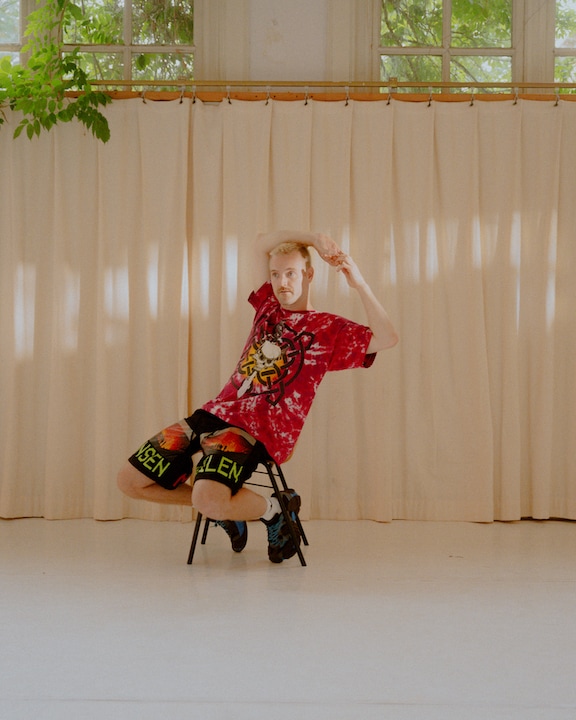
I think of theatre performances as an embodied learning phenomenon. If your consciousness is built from the experiences you take in through your nervous system, then a crafted expression of the human experience that reaches as many senses as possible leaves the biggest impression on your worldview. Besides our performances, we have a social dance programme called Raving Solutions, and through these community practices we’re expanding outward. It makes me wonder about turning ARK from a foundation into a next-generation dance company built on queer sensibilities and applied principles of inclusivity. Because if you can’t include yourself, how can you the hell are you going to include anybody else?
Our goal is to provide dance every day, for ARK and the community around us, and to make a balance between the performative and the social. We’ve been the planting seeds for years, we may now have a fruit-bearing garden. ●
Asset, Liability & Equity tours the Netherlands through to January 2027, dates: www.arkconnorschumacher.com/calendar