

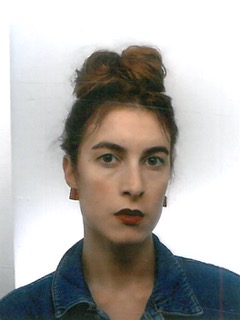
I meet Beatriz Valentim in the beautiful gardens of Centro Cultural Vila Flor in Guimarães, Portugal. We’re only a 40-minute drive away from her hometown of Póvoa de Varzim, a small city on the Portuguese coast known for its seaside destination and beach life. Currently working as a freelance dance artist and dance teacher in Porto, Valentim originally studied dance at The National Conservatory of Lisbon before completing an internship with Budapest Dance Theatre. Later on she studied sociology, opening up new possibilities and themes in her dance practice. During our conversation, we chat about everything from memory to community work to dance as a social tool for connection.
Memory seems to be a recurring theme in your work. Where does that interest come from?
This interest started while creating O que é um problema? (2023), a piece for teenagers. I was looking for a ‘problem’ that young people are interested in, but I couldn’t define one. Through conversations with them and reflecting on my own adolescence, I realised many fears and anxieties come from our upbringings and pressure from our parents. In the piece, we include a text that feels like the mother’s voice inside our heads. Although the show is meant to be for the youth, I’ve had feedback that people think it is more directed towards parents, and helping them to understand their kids better.
Since this performance, I have started to think that everything we choose in our adult life has something to do with our childhoods – with our families, contexts, and cities. I think everything that I say or do now, is to do with my memory. Memory shapes everything. We all carry something from the past, we just don’t always allow it to surface.
What does working with children and teenagers offer your artistic work?
It takes me out of the artistic ‘bubble’. In schools, I encounter resistance, gender stereotypes, and inequality. These experiences feed my work and challenge my assumptions. They show how urgently young people need space to be heard. I have also experienced how some teachers enhance the negative behaviours, or have given up. I want to change that perspective.
What made you study sociology, and how does that influence your artistic practice?
Initially, I went to study sociology because my father said I had to. He works in finance, so dance was not really seen as a proper, stable job. I thought, ok, if I have to study, it should be something that I can relate to my dance practice afterwards.
Sociology gave me tools to investigate – how to interview, observe, and analyse people. I have found this useful both in teaching workshops and creative processes. It also deepened my understanding of how society and upbringing shape who we become.
You describe dance as a social tool. Why?
Because it involves the body. Dance creates connection in a direct way, especially through touch. Many teenagers aren’t used to physical contact beyond aggression, and dance can shift that. It allows communication beyond words. I think a lot of young people don’t know how to express their emotions. Letting them speak through their bodies is transformative.
Your upcoming solo revisits loneliness, which you explored in your first solo work back in 2018. Why return to this theme?
Loneliness scares me. I don’t like being alone in life. I tend to go deeply into my thoughts, and that can be overwhelming. This piece is a way of facing that fear. Now, I feel more ready to approach my personal experiences more openly, and with more support.
Is there also a social dimension to this?
Yes. Loneliness is still a taboo. We don’t talk about it enough, even though many people feel it. Especially today, with so much individual pressure, it’s important to acknowledge it and create conversations about it. Dance is a great tool for creating community and connection.