

Amsterdam takes a hot summer in its stride. Not merely because of the promise of inexhaustible canalside drinking, swimming and late night bike rides, but also because the arrival of the sun sets in motion a plethora of festivals that light up the venues of the city. One of the most ambitious is Julidans, a heavyweight contemporary dance platform that could – if you’re up for it – see you watching up to 26 productions at 9 different locations over 2 weeks.
Since 1991, Julidans has honed in on the ability to curate a versatile lineup that weaves choreographic big guns with Netherlands-based emerging creatives looking to elevate their work to the international stage. I took the latter as my focus for this year’s festival, shuttling into a multi-day experience of work from fresh minds who, while representing myriad backgrounds, have found their footing within the Netherlands dance scene.
Andreas Hannes (GR): Anthology
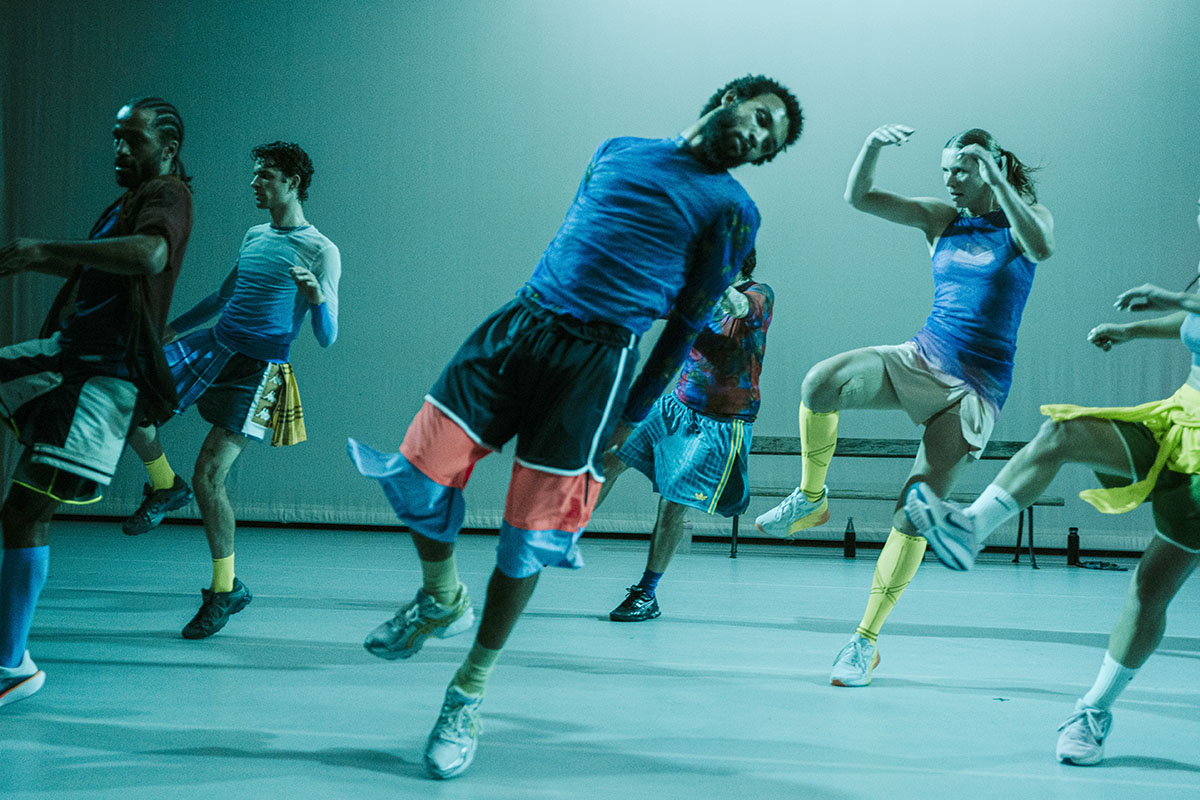
The warm greeting from Hannes and his performers suggests that tonight I’m invited to unashamedly enjoy myself. This comes in handy when the music kicks in: unyielding medleys of noughties bangers. These hypersweet pop anthologies give the performance its name, celebrating the enmeshing of shared histories, nostalgia and pop culture. They also dictate the show’s pace. Beginning in silence, two performers trace geometric pathways, progressing from a stroll towards a lightweight skip – the choreography’s touchstone. In the first anthology these pathways erupt into moments of unison that sit satisfyingly with the music, through impeccable timing or passionate lipsyncing.
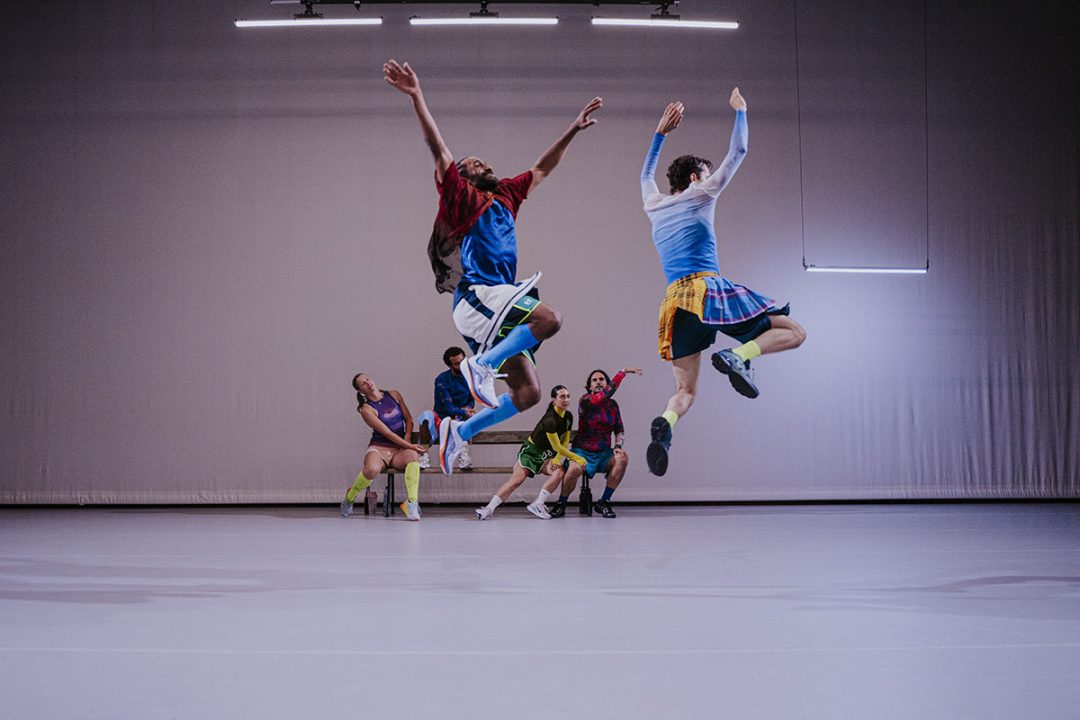
This structure of high-energy duets, trios, sextuplets repeats throughout, with different combinations of performers strutting their stuff beneath colour-changing striplights. Their technical capacity is palpably huge, and even after more than an hour of intense skipping, shaking and jumping, each dancer exudes an effortlessness that amplifies the light atmosphere.
The choreography is unpretentious. Rather than reinventing the wheel, it draws on familiar movement lexicons: velvety petit allegros and high energy hip-hop sequences. Arms form bridges beneath which bodies pass in the tradition of folk dance, though this reference feels less considered, leaning towards aesthetic trend rather than homage. The movement is as much a medley as the soundtrack.
At some untraceable point, I grow fatigued at the sugary lyrics of Sheeran, Swift and Adele. Eventually the pace slows, and after regrouping the dancers continue, to squeaking shoes and panting breath. But soon enough the anthologies begin again – and I regret that this moment of exhaustion and oversaturation isn’t pushed further.
Still, the audience is with Hannes from beginning to end, thrilled enough to join the hollering for the six pop-possessed bodies on stage – and, if they’re anything like me, desperate to bop along to guilty pleasures on the ride home.
Sheree Lenting (NL/SUR): Sons of the Soil
What lingers most after Sheree Lenting’s poignant duet exploring layers of male identity is the sensitive yet visceral connection between performers Gaspar Ribeiro and Yashasvi Shrotriya. Between side-eyes, playful grins and fearless lifts, I’m granted a window into an honest display of brotherhood. This is a testament to Lenting. There’s an artistry in creating a safe, open process in which each dancer can reach the limits of vulnerability unfolding on stage.
For every moment of raw power, there’s a harmonic balance of delicacy. Shrotriya hypnotically swirls across the floor with speed and finesse. Around him orbits Ribeiro who, mounted on a skateboard, glides with ease. His turns are finely tuned, his position so secure that he unleashes the body into slow-motion arm ripples – a smooth wisp of wind sweeping the space.
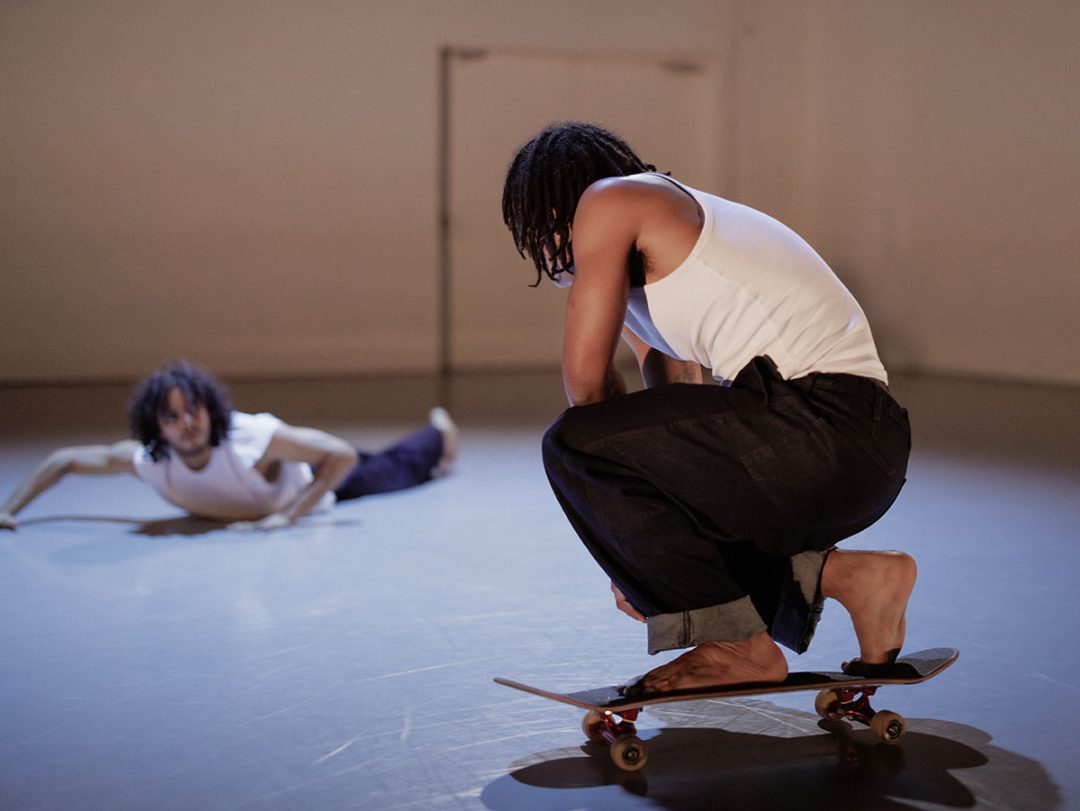
Lenting imbues the performance with nods to the diasporic experience by grounding the choreography in dance forms beyond the European canon. Through the language of capoeira, Ribeiro and Shrotriya unite in a fluid corkscrew duet, navigating competition and intimacy in the same breath. There are also flickers of krumping, and fast feet and hip motions that allude to salsa.
A tension grows between the performers as they soar over each other’s torsos, land on top of shoulders and fly through space, guided by the support of the other body; brother lifting up brother. This seems to be at the core of Lenting’s work: reclaiming the world of young men which, as mirrored via Jermaine Berkhoudt’s commanding voiceover, has always taught them to get up, toughen up, man up. Yet in Lenting’s hopeful imaginary, to ‘man up’ holds a revised meaning: a sensitive, endlessly unravelling process that cannot be achieved alone.
Melyn Chow (SG): becoming god
becoming god could be watched again and again, from every angle, in varying moods, with different companions. Each experience would be radically distinct, both for the audience scattered on red stools, crouched on the green plastic floor, or standing near the centre, and for the five people animating this immersive set.
I hesitate to say ‘performers’ because the 60-minute happening they sustain feels so palpably real I barely comprehend that what I’m watching is an intelligent, personal and confrontational creation. Chow draws from experiences of spiritual taboos and a connection with her uncle – a Chinese spirit medium. At first, all four collaborators weave through the room, infusing the space with movement, sounds and smells. Sound designer Lưu Thoại Linh slips to a makeshift DJ booth: an unconventional altar of crates, oranges, sweets and flowers. From this station emanate the transforming beats that fuel the work. Energy circulates, jostled by flashing lights and pulsating sounds, embodied by Chow, Nazar Rakhmanov and Sjaid Foncé through ceremonial spinning, shaking and shouting.
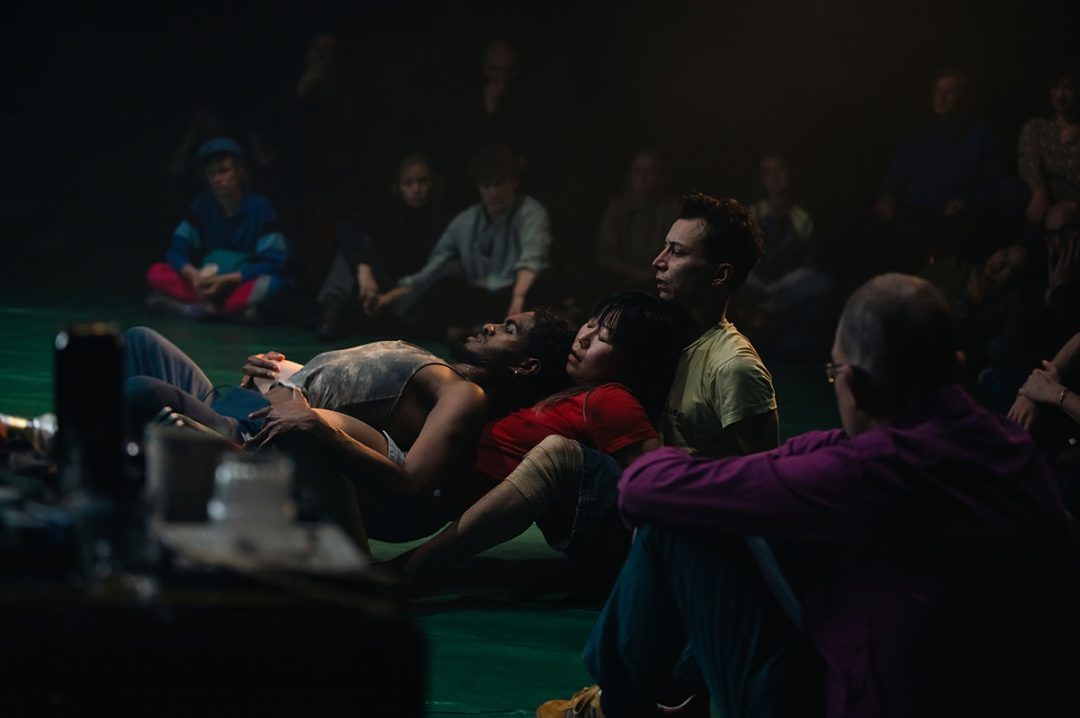
Three distinct moments see each one channel something ‘other’. Rakhmanov spins himself into possession, emerging from his whirlwind wrestling with his shirt in a bid to exit his body. Foncé becomes an ethereal icon, hair adorned with flowers and height amplified by six layers of shoes. Chow smokes from incense sticks, her torso tinted red, slapping body and floor. These moments feel unpredictable and improvised; there is risk in the air. The lengths to which they push each other are beautifully unhinged. Just when I need security, they whirl together again. In these harmonic moments, the feeling is of ecstatic release on both sides of the ‘stage’.
Someone shouts ‘come on Julidans’ as if to stir an alternative reaction. Am I meant to move? To release? To scream? I’m unsure of my role, but perhaps my unease comes from the topic that Chow is addressing. Modern society has erased connections with the sacred, vilifying ritualistic practices that transcend capital value. Yet in digesting what is happening before my eyes, I’m able to conjure up an unfamiliar and otherworldly sense of awe. Basked in the golden reflection of a large copper plate, the three spirits take flight in an act of centrifugal magic: Rakhmanov atop Foncé’s shoulder, Chow hooked under his feet till she is suspended, spinning. Lights fade, but an echoing mysticism remains.
De Dansers (NL): Shake, Shake, Shake
Resurrected seven years after its premiere, the urgency of De Dansers’ rockstar composition for six bodies, five instruments and one outdoor stage, feels stronger in this post-Covid, hyperdigitalised context. Beneath the punchy lyrics lies a call to reject material obsessions in favour of connection, community, self-fulfilment. The choreography celebrates physical potential, displaying how human connection creates bonds, and how joy manifests in bodies that move, grow and age unapologetically. Coalescing, the drive behind Shake, Shake, Shake offers a burst of collective hope in our otherwise hope-exhausted times.
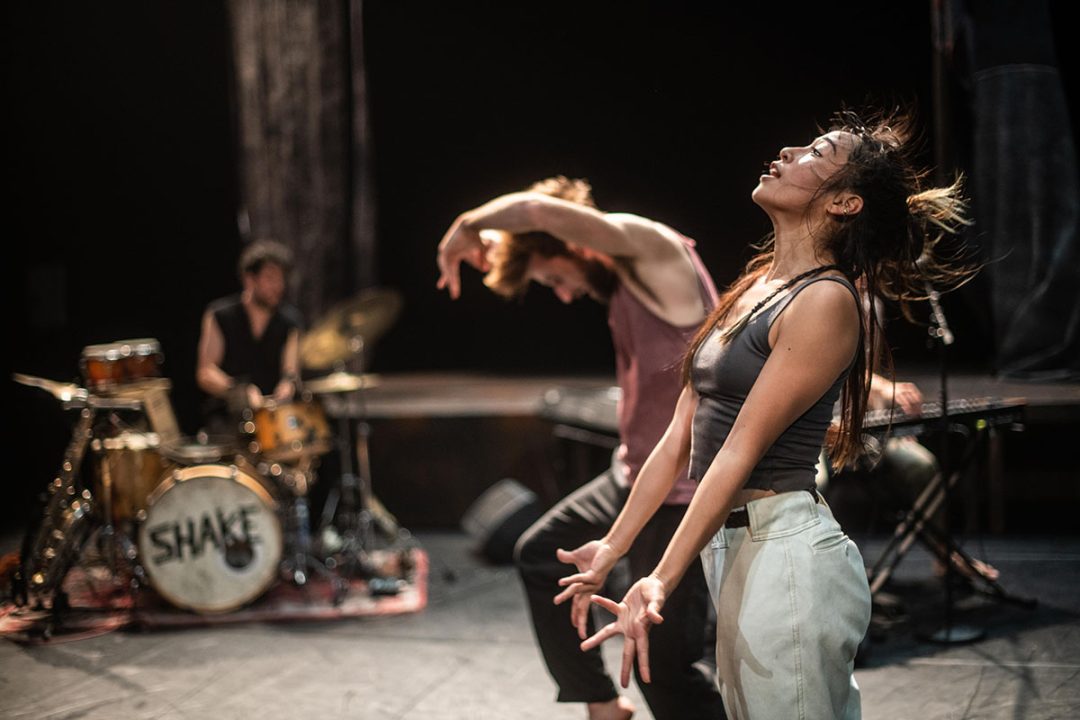
De Dansers is a collective of ambidextrous performers – including Guy Corneille and Josephine van Rheenen who conceived the piece – who make no distinction between their musical and physical talents, which develop in such close proximity they appear as one medium. Descending saxophone scales echo in rolling bodies. Marie Khatib-Shahidi’s sprightly jumps before the drum kit seems to instigate the beat. The stage is an ever-moving, sounding core of action. Instruments pass between performers. Groupings shift constantly; soft duets, playful instrumental trios, or six performers running on the spot managing to sing unencumbered; veritable pop stars.
The band is completed by Vondelpark Open Air Theatre, where the bustling park bleeds into the performance as a wildcard musician. This interaction between the outside atmosphere and the dance reaps serendipitous rewards. A helicopter emits audible pulses to the rhythm of performers shaking in unison. An intimate duet between Khatib-Shahidi and Wannes De Porr is joined by sounds of parakeets.
Surrounded by art, an overflowing park theatre, and the outside world’s unexpected interjections, De Dansers’ message becomes abundantly clear. You don’t need a lot: the vibrant world is just outside, waiting for your arrival. ●
02–14.07.2026 Amsterdam, Netherlands