

The stage has dissolved, so too has the audience. Instead, the body is captured by small digital devices glued to our appendages. With each tap we add endless footage to ever-expanding archives: media made by human and machine. You nestle in beside your grandmother, who beams as she shows you a clip of a ballerina. It is deceptively fleshy, until you spot a glitch, imperceptible to many: a leg passing through another as if it were made of air. You wonder when saving this slop to a ‘watch later’ archive replaced a ticket to a live performance…
No, you’re not flicking through the pages of a sci-fi novella – such vignettes are closer to the factual rather than the fantasy. You might be a live-experience, theatre-going purist, but that does not make you ignorant to the ways our increasingly digitised present is shaping the future of dance. As artists continue to push the boundaries of how and where dance is experienced, from the stage to the VR headset, it becomes increasingly important to consider what we actually do with all of this media, and how we organise and preserve the films and footage that have documented performance for more than a century.
What does the archive mean to dance professionals in our early-AI era, and why curate around, discuss, and write about it now?
For Cinedans, a Netherlands-based dance film organisation under the direction of Martine Dekker, the question of what we do with dance in its digital form is not novel. Founded in 2002, Cinedans has been forging a dedicated space for the development and sharing of national and international dance films in the Netherlands. In the walls, halls and screening rooms of the momentous Eye Filmmuseum Amsterdam, Cinedans takes shape through four strands: an annual dance film festival, a series of professional workshops, international film distribution, and a programme of online resources. Three years ago, they added a new string to their bow by initiating the Dutch Dance Film Archive Project (DDFA), transforming their commitment to approaching the archive into a national enterprise. Beyond tackling the more practical responsibilities – digitisation, preservation, categorising – the DDFA has allowed Cinedans to stage essential conversations with industry professionals, continually resituating the archive in a modulating modern digital context.
I set out to embroil myself in precisely these conversations via Cinedans’s 2026 professional programme. The weekend of panels and roundtables seemed geared towards addressing this growing intersection between AI and the archive. Setting aside my personal reservations towards the AI-ificition of culture, I entered each discussion as I entered this article: with genuine intentions of remaining open to proposals of ‘digital potential’ or ‘efficient automations’. Yet the reflections that follow are inherently imbued with my own distaste for generative AI, and my own joyous experience of tactile media when concerning the dance archive.
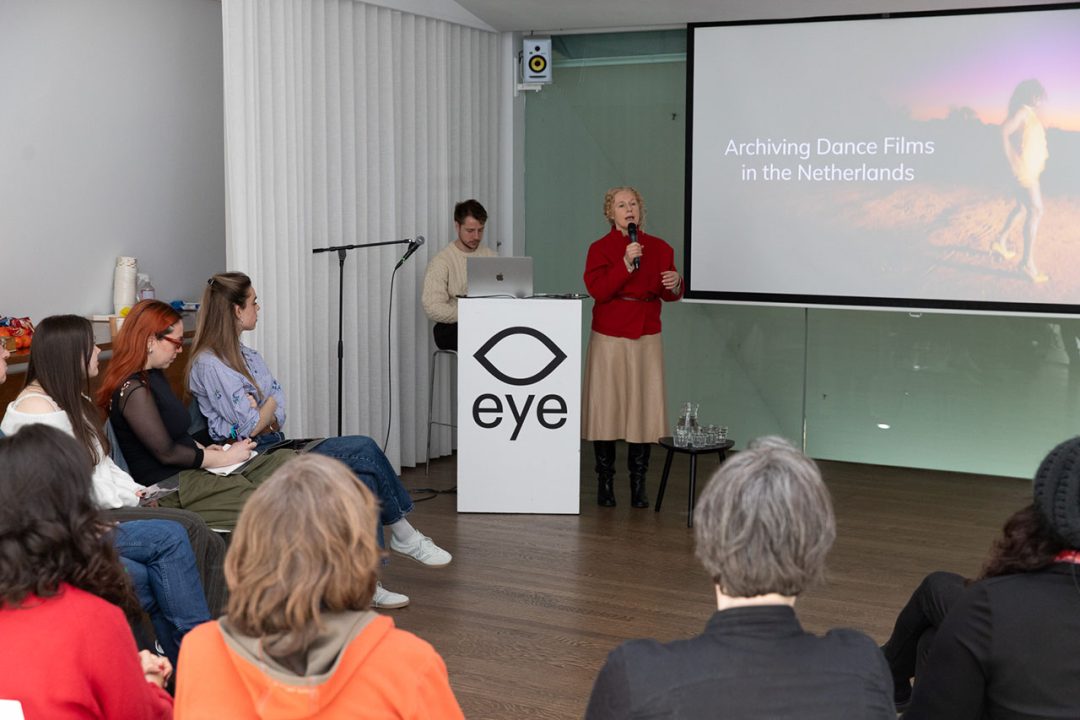
My fondness for the latter was satiated by the first presentation at the Archiving Dance Film in the Netherlands roundtable, delivered by Thomas Thorausch and Christiane Harrter from the German Dance Archive Cologne (GDA). Their archival collection comprises some 900 costumes, 13,000 books, 600,000 articles, and 6500 films spanning analogue and digital media. More than a repository for dance documentation, the GDA is an important site for research, inspiration and creation, making a case for the existence of physical archives in an age when ‘research’ often equates to typing out a prompt and having sources presented to you in neat packages. The relevance of their dance history is up against the bot. However the GDA is no stranger to building resilience in the face of external pressure. The original GDA, established on the site of Akademie der Tanzlehrkunst in Berlin, was almost entirely destroyed during a World War II air raid. Rebuilding from the ground up through national support and generous personal contributions, and shifting its base across cities, the archive is now the momentous collection that we see today.
This roundtable served as a way for disparate organisations – the GDA, DDFA and the Allard Pierson Performing Arts archive – to collectively grapple with current complications and crises facing dance film archives. Hyperpersonalisation and instant creation as byproducts of the early AI era has induced a rapid onslaught of new media performance; archives are swimming upstream just to remain relevant. Further still, the staunch support of dance history evidenced in the miraculous rebuilding of the GDA is but a mere memory. In a familiar tale for much of Europe, the Netherlands has been tackling an ever-shrinking culture budget, walking hand in hand with the election of a far-right government in 2023. The impact of cuts to subsidies and a rise in VAT for cultural institutions reverberated in the dialogue at Cinedans, and was brought centre stage when Conservator and Teamleader Sylvia Alting van Geusau revealed how her team at Allard Pierson had been reduced from more than fifty permanent staff to a meager two. Vibrant archival halls becoming ghost towns.
Beyond these less palatable but necessary discussions, Cinedans was also an opportunity to muse on solutions, some speculative or aspirational, others already in motion. Jellie Dekker, initiator of the DDFA, used her presentation to make a case for a united archival front in the Netherlands. Highlighting the essential work on mapping and preserving dance films from the Netherlands, Dekker speculated on what might be possible should archives put their heads together and generate a centralised digital space for accessing historic Dutch screendance. Or at least, to think on standardising systems of categorisation and functionality across archives, simplifying how punters like me can research and access footage.
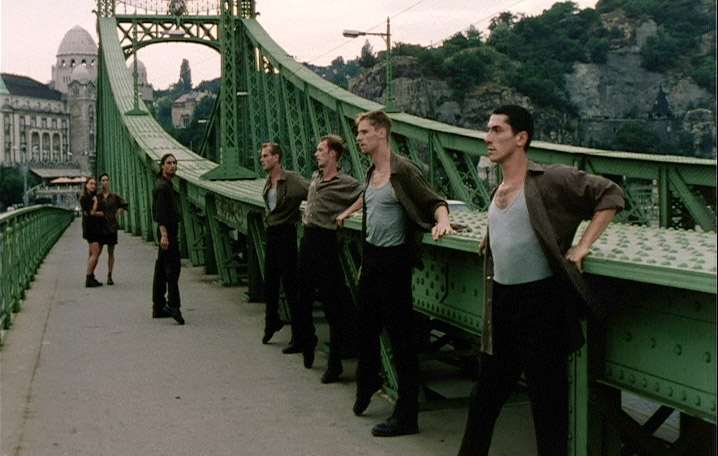
Cinedans is the publicly accessible face of the DDFA, allowing them to resurrect remarkable footage recently digitised for the big screen, and convincingly bolstering their case for the preservation of dance film. I caught one of these resurrections in a stowed out cinema. Echoes of a Body of Work was a tasting platter of camera choreographies from Dutch icons Hans van Manen, René Hazekamp, Dick Hauser and Krisztina de Châtel. This collection ranged from the playful camera study by theatre designer and artist Paul Vroom of van Manen’s precise yet humorous Twice (1973) (Jon Benoit grooving to James Brown’s ‘Sex Machine’ with the unmistakable hairstyle and unitard of the 70s), to the forty-minute feature Stalen Neuzen (1996) from de Châtel (seven dancers bounding through Budapest, before escaping within the earth and dirt of the countryside). Despite crackling audio and nostalgically fuzzy images, each of these films pierced through the screen with remarkable relevance. Themes like the masculine intimacy of Hauser’s Men of Good Fortune (2000) resonated with today’s discourse around the manosphere; van Manen’s Trois Gnossiennes (1986), filmed in a warehouse out the window of a car, mirrored the contemporary aesthetic drive towards industrial and site-specific performance. I couldn’t shake a kind of terror imagining that these films, which serve not only to capture history but to expose the circularity of artistic trends, would slip into obscurity without the work of the DDFA; tape gathering dust, colour fading, and the steps and breaths of pioneering dance artists from the Netherlands going unseen and unheard.
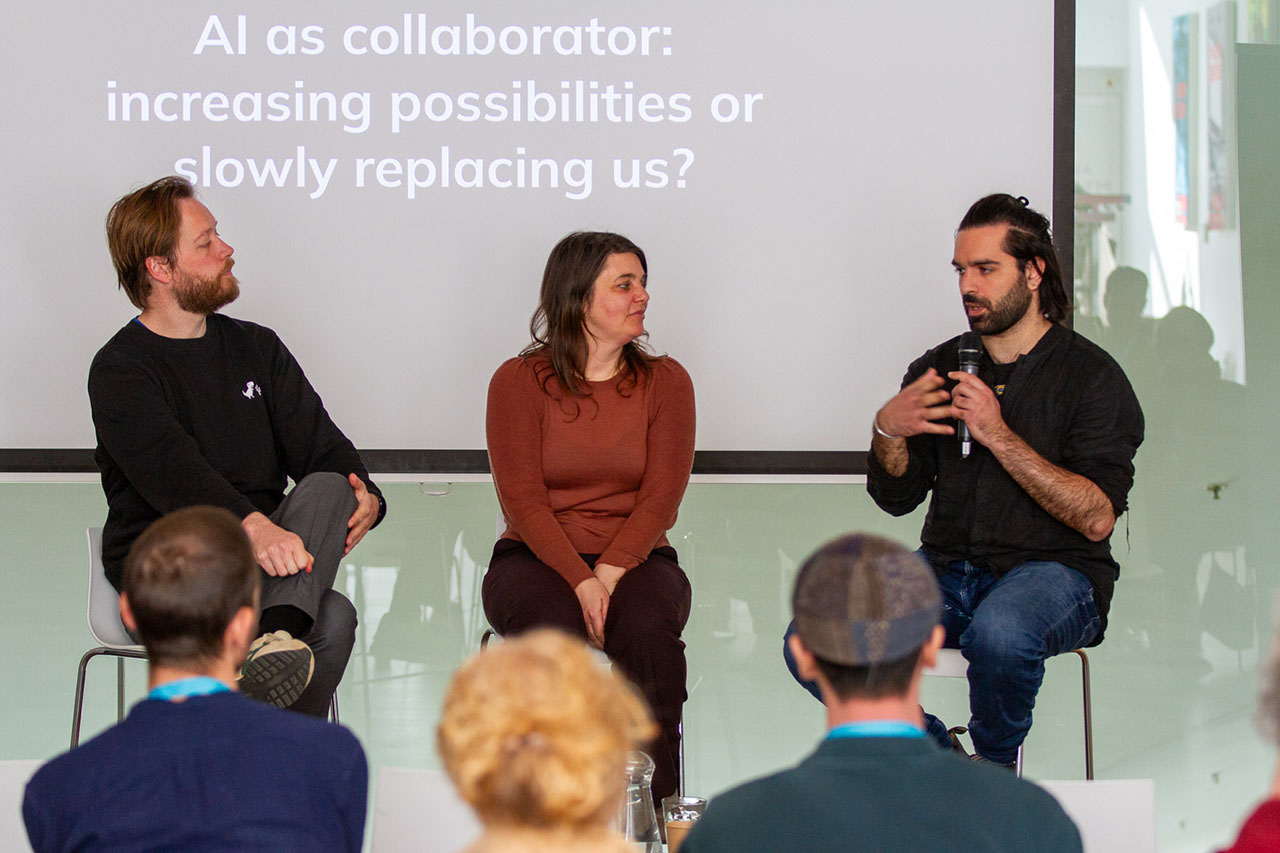
There is so much our current dance landscape can gain from accessing these digitised treasures, from inspiration to appreciation for a culture’s history. But it’s not all sunshine and pixels. As with any singular solution, we must remain critical to the digital answer to archival preservation: there are things that we risk losing if we surrender dance media entirely to the computerised. Most pressingly, we render footage susceptible to manipulation and editing, made ever more sophisticated by the advent of generative AI, that could eventually distort originals beyond recognition. The vulnerability of dance media at the hands of AI was a topic raised at Artificial Intelligence: A double-edged sword, a panel talk between artists and AI experts.
‘
A bloated and unsatiated beast, tricking us into suckling it with our creativity till it barfs back a completely distorted overview of dance history
Transporting us even further into murky territory, someone proposed inputting all dance media into an AI software, ‘feeding’ it our knowledge through film and allowing it to become an archival companion; the AI’s ‘memory’ preserving the legacy of iconic dance artists ready to be called up in a single prompt. This proposal conjures up a bloated and unsatiated beast, tricking us into suckling it with our creativity till it barfs back a completely distorted overview of dance history. Frustration lingers after this talk: matters left untouched, intentionally or not, around the ethical responsibilities of the cultural sector to refuse digital tools that are decimating the climate, being used as weapons of war, and eroding literacy levels.
Are there alternatives to the digital mono-archive?
One way to ensure the longevity of the archive is by constantly reimagining it. The GDA explained how they use their holdings to curate public exhibitions that, like Cinedans, position archival material in relation to timely topics. Deploying their vast material archive, they present films alongside costumes, handwritten scores and sets, developing holistic experiences of dance history. In this way, they create a ‘living archive’ that beats, breathes and grows with the changing of the times. Similarly, at Allard Pierson, van Geusau asserts that their archive is alive and breathing – it just requires some added external force to get dancemakers and researchers in through the doors to kiss it and wake up its potential.
As a dancer turned artistic researcher whose familiarity and confidence with research skills and archival institutions was only cultivated post-conservatoire, this piqued my interest. A shift is needed to encourage the makers and artists of tomorrow to become acquainted with the archive as a collaborator rather than a graveyard of dead artists. Some of this falls to educational institutions, who can facilitate dance students’ engagement with archives as an alternative to uber-efficient but limited and biased AI searches. Archives also hold some responsibility. They can appear open and accessible, like the GDA hosting archival breakfasts with nearby conservatoires, meeting students and letting them experience the ecstasy of rifling through small fragments of history, or Cinedans developing their educational programme alongside this annual festival. Artists too need to face the question of how they want their work to be experienced in 5, 10, 15 years from now; to determine how they want to be remembered on their own terms, rather than those imposed by an AI archivist.
‘
Without ample forethought, copyright becomes the dance film archivists’ worst nightmare
This was the question posed by Maarten Zeinstra from Creative Commons in his presentation on Creative Commons Licensing, which looked into defining the relationship between artist and archive before it’s too late. Without ample forethought, copyright becomes the dance film archivists’ worst nightmare, rendering important bits of dance history completely unusable – or worse, leaving the decision to some distant heir who might see it as financial profit rather than public history. On a very practical level, when a dance artist takes into consideration the symbiotic relationship between artist and archive, pre-establishing how they want to work together, they can contribute to securing a thriving and unthreatened dance archive years down the line.
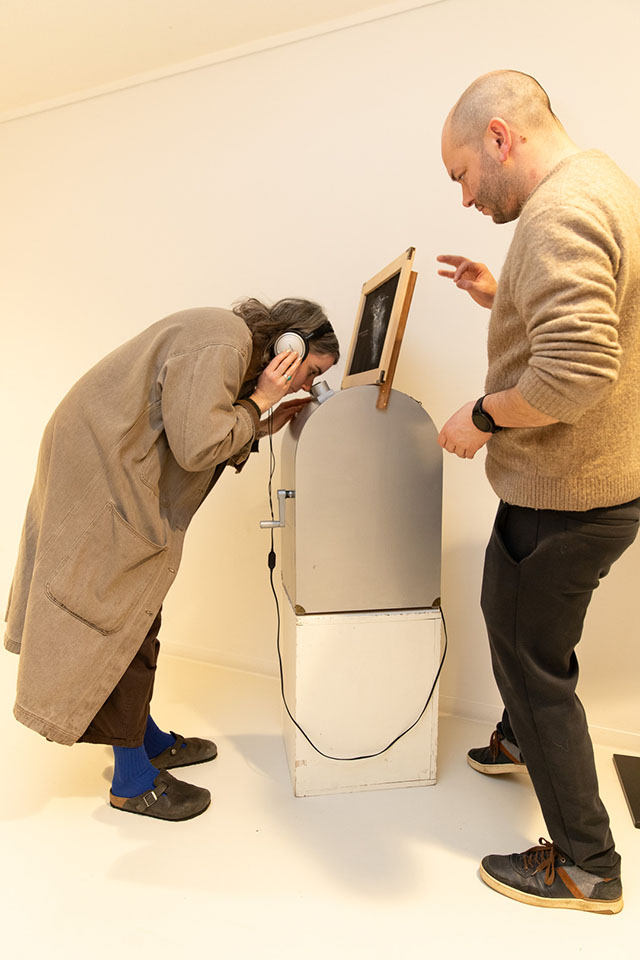
As I reach the last dusty aisle in my exploration of dance film and archives at Cinedans, this final point sticks with me: how can we work in tandem to secure our memory? Our motion towards the future takes place in a delicate choreography between artist, archivist and AI, each working together to keep the historic dance legacy of the Netherlands, and beyond, intact. These discussions were a call to keep thinking about what responsibilities we have to preserve dance film, what tools are at our fingertips, and what choices we can make when it comes to digital intervention. Despite my AI-phobia, I know it’s vital to keep moving with the times. Dance history will never be static – not when we are talking about the most embodied and active artform. The archive is active too: a site for repetition, reference, remix and reliving iconic footage. ●
Keen to dig into some dance film archives? I recommend:
www.bloomsburyvideolibrary.com
numeridanse.com/en
www.tanz-digital.de/en/home
Or reach out to your local on-site archive. Requesting and viewing material is often easier than it seems, and you never know what treasure you might happen upon…