

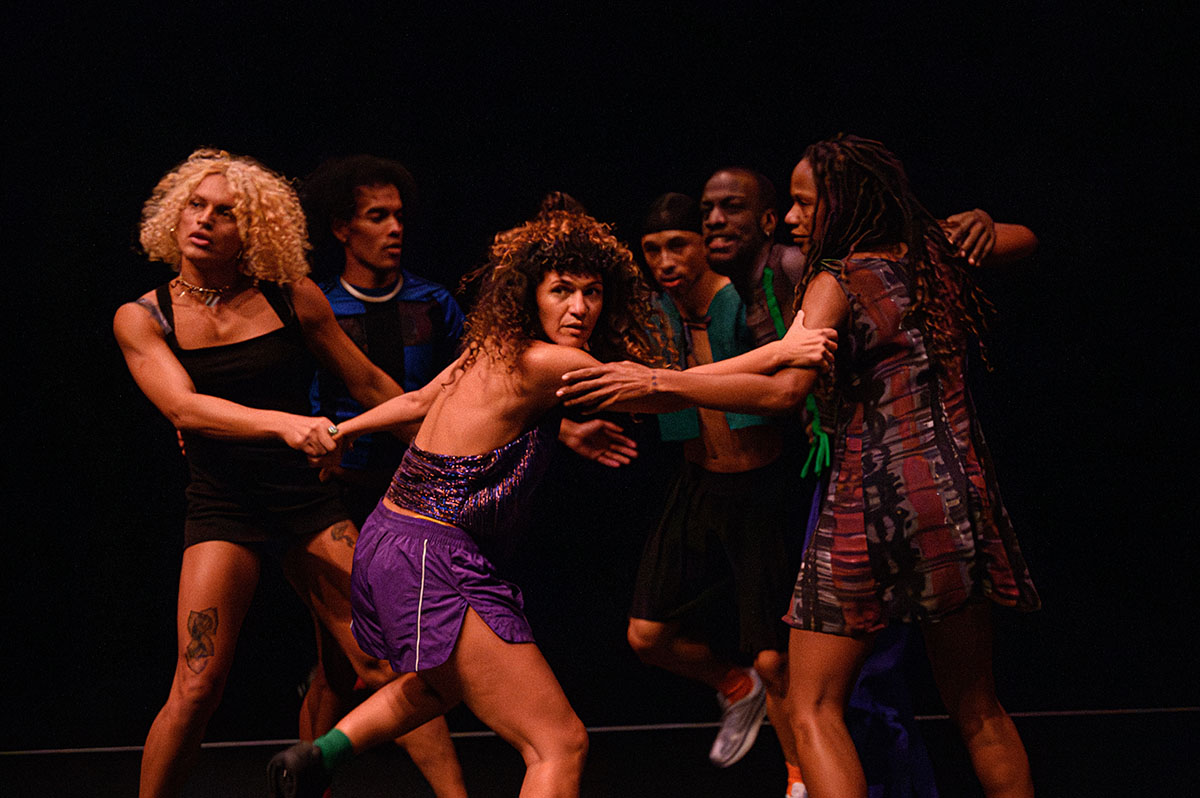
This year’s Tanz im August opened alongside another ugly flare-up of German far-right resentment. Outside the Volksbühne, the theatre’s new artistic direction inaugurated the season by installing a Volksbad – a free public pool on the square. One afternoon was reserved for EOTO, a local Black youth organisation whose members already know German waterfronts as sites of racial harassment (a German lake made headlines after demanding visitors speak German to enter). The far-right picked the fight immediately, branding the event ‘anti-white racism’ and ‘apartheid’, and demanding the theatre be defunded – never mind that the Volksbad hosted plenty of other private groups. The nation-wide smear campaign escalated quickly enough that EOTO cancelled the event under threat from neo-Nazi groups, and the theatre shut the pool altogether out of safety concerns. ‘Nobody swims today’, read their statement.
A few subway stops away, under the vaults of the Oderberger Hotel’s swimming pool Dana Michel, a Black Canadian choreographer, opened the festival with YOU CANNOT CAN: a sharp and subversive piece on who’s let into the water and who gets stopped at the gate. Staging her own body’s uneasy relationship with the pool, Michel traced a long history of deciding, generation after generation, which bodies get taught to swim and which don’t (reviewed here). Sitting poolside, feet in the water, I watched her struggle to trust the pool while down the road another pool remained closed by the very hatred she was interrogating. And I couldn’t help but wish the EOTO kids had their water moment too that day – away from white rage, if only for a few hours.
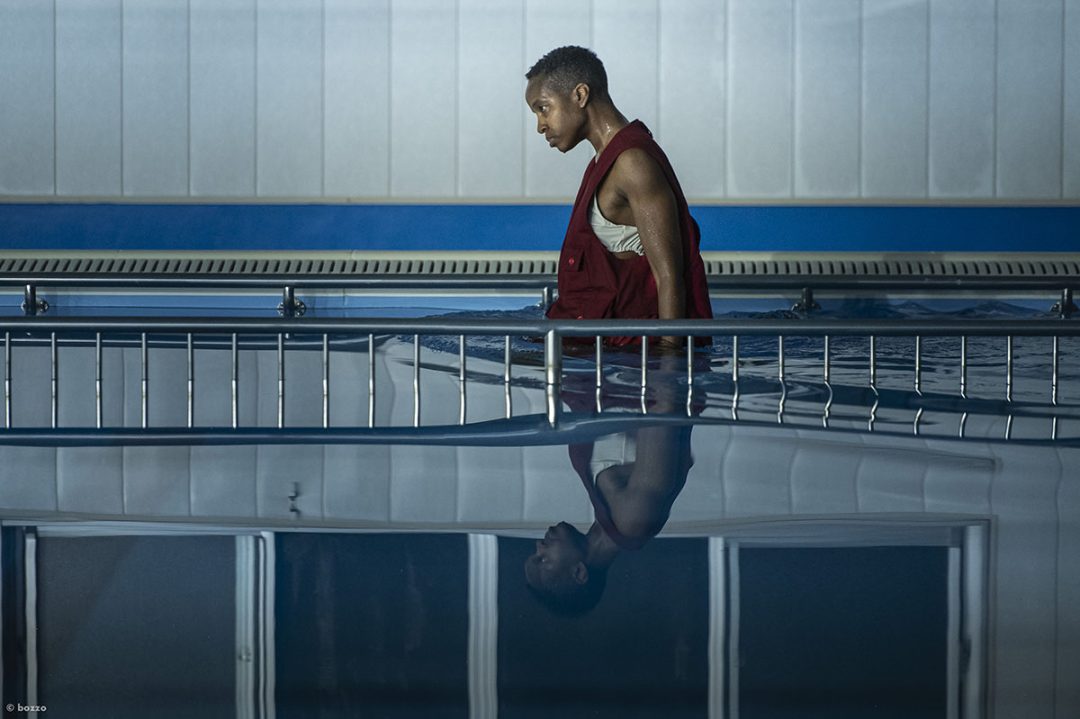
That same water that turned out to be a central thread across the programme anyway: raining from the rigs in TRAPICANA, flowing through a tub in Après moi le déluge, bubbling through glass tubes in Choreography of Water, and pooled at Michel’s feet. Fellow writer Emily May and I drifted through the rest of the festival and dug out the shows that hadn’t yet found their way into Springback Magazine already. —EB
Mohamed Toukabri: Every-Body-Knows-What-Tomorrow-Brings-And-We-All-Know-What-Happened-Yesterday
Text – the extent to which it features in dance performances, or risks erasing the body’s ability to speak for itself – has emerged as one of the hottest topics on the European contemporary dance scene over the past couple of years. Brussels-based dancer and choreographer Mohamed Toukabri tackles it head-on in his solo performance at Tanz im August. Cycling through a diverse range of movement vocabularies, he strives to demonstrate ‘the many facets of his dance heritage’, as well as parts of himself that ‘don’t want to be translated’, as he states in a voiceover.
Melting effortlessly between hunched-shouldered hip-hop freestyle, vogue-like arm rotations and geometrically precise phrases in the style of Anne Teresa De Keersmaeker, he reveals himself as a talented and versatile performer. Yet despite his initial ambition to eschew translation, the entirety of Toukabri’s choreography is accompanied by audio and projected text that either didactically describes what’s happening – ‘this is the beginning of the performance’ is particularly jarring – or reiterates the questions he’s dancing in English, German and Arabic.
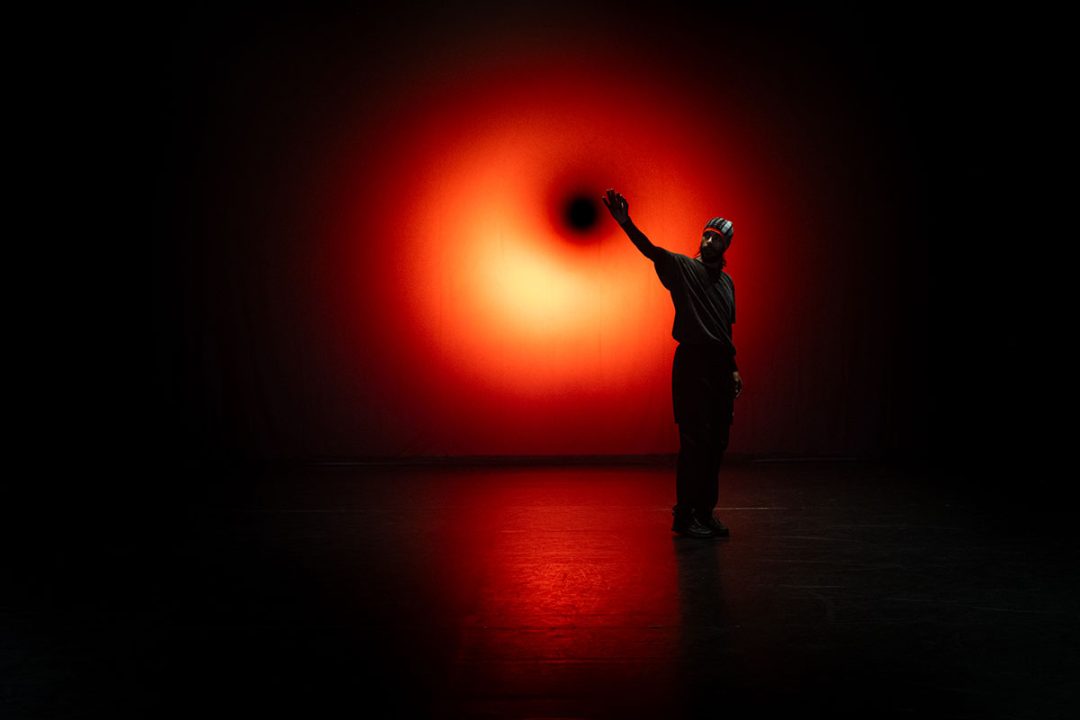
Some, like what gets lost in translation and what changes in a person when they switch the language they use to communicate, are genuinely thought-provoking. Others, like whether spectators feel uncomfortable hearing foreign languages on stage, feel unconvincing when posed in a multicultural city where being surrounded by conversations one can’t understand is commonplace.
Yet Toukabri does make one distinct choice that goes some way towards demonstrating the communicative potential of the body. Towards the end of the performance, he frees his head from a sheet of knotted fabric. Only then do I realise I haven’t seen his face – the primary site through which we usually relate to and empathise with others – for the majority of the show. Nevertheless, I feel like I’ve got to know Toukabri; his flourishing gestures, controlled headstands and bouncy footwork have told me as much (or more?) about him than an expression ever could. —EM
Simona Deaconescu: The Choreography of Water
Despite the scientific appearance of the network of interconnected tubes that sprawls across the stage, there’s a decidedly mystical feel to Simona Deaconescu’s The Choreography of Water. The work’s trio of performers – one of whom is Deaconescu herself – take turns stirring backstage beakers like witches tending cauldrons; duetting with large, glass instruments akin to chemistry apparatus, blowing into them and contorting their faces in a manner recalling Athena playing her aulos; and undulating, rippling and rotating their bodies like liquid circling a plughole.
Sheer costuming catches the light and lends the dancers’ movements an effervescent quality. Yet even this added sparkle struggles to make the relatively simplistic fluidity-inspired choreography compare with the beauty of the element itself: water relentlessly fizzes and pulses through the tubes like blood circulating the body, its current captivating as it waxes and wanes in response to the ominous and glitchy electronic score flooding the auditorium.
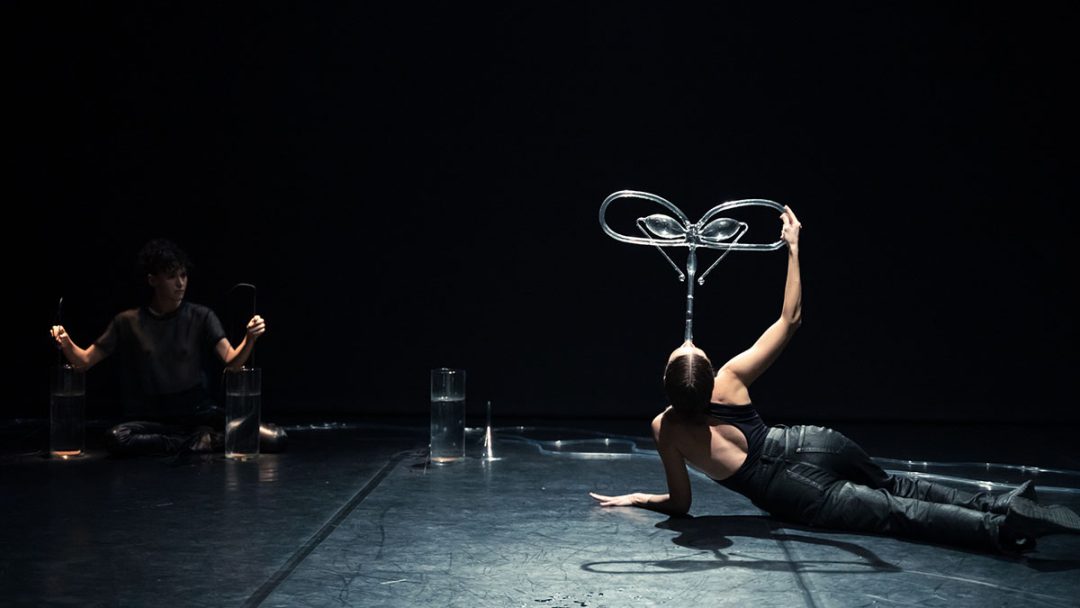
In the programme text, Deaconescu poses the question: ‘what could the future look like if we were to treat water as an always-co-choreographing entity?’ Yet in The Choreography of Water, it emerges as a dominating rather than collaborative artistic force, and commands more attention than the human body. Against the backdrop of the recent devastating floods in Nepal and China, in which water has so violently asserted its power over humanity, this imbalance feels coincidentally poignant. —EM
Ballet National de Marseille/(LA) HORDE: Après Moi, le déluge
At this year’s Tanz im August, there’s no shortage of works seeking to address the troubled state of the world. Two take markedly specific approaches: Lithuanian and Belarusian artists Agnietė Lisičkinaitė and Igor Shugaleev explore the political tensions between their two countries in CLAP & SLAP, while Greek choreographer Chara Kotsali’s IT’S THE END OF THE AMUSEMENT PHASE frames its onstage action with projected and spoken text that methodically catalogues wars and disasters through the 20th and 21st centuries.
In contrast, in Après Moi, le déluge, art collective (LA) HORDE’s latest work for Ballet National de Marseille, the choreographers take broad brushstrokes, painting a vague, almost glamorising picture of ‘a world in crisis’ that prioritises grungy aesthetics over meaningful messaging. Everything is done on an epic scale: the stage tilts and crumbles beneath the cast who scuttle beneath it like cockroaches, writhing in bundles of bodies and contorting their faces into a camera that projects close-ups onto the back wall of the stage. Later, a Roman-style bathing pool emerges for three performers in sagging-skin prosthetics to lounge in before grabbing at and stretching their artificial flesh.
Everything is epic – except, that is, for the movement, which, despite directing a dance company, (LA) HORDE seem to treat as secondary to spectacle. Duets consisting largely of dragging would have little visual interest without moody smoke and a mirrored back wall to reflect their sketchy motions. Dancers endlessly performing a lateral kicking motion to heavy metal music feels less like deliberate repetition than filling time.
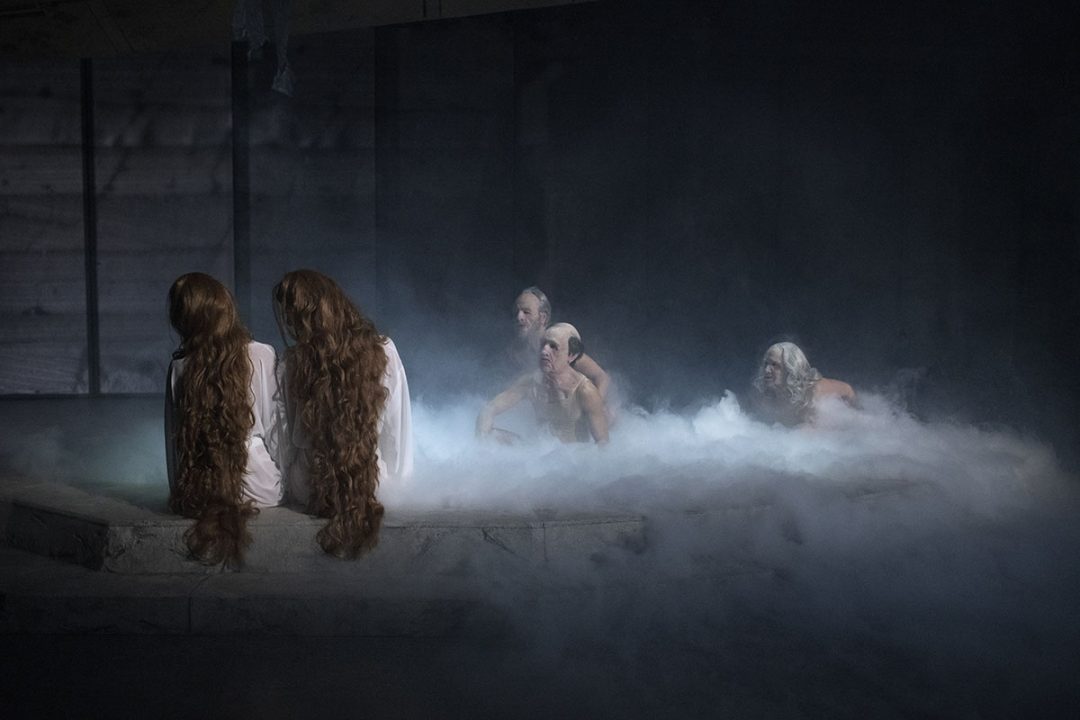
Moments when the cast form phalanxes and pump their fists aggressively suggest a sense of revolutionary abandon—to use dance to rage against the status quo. This kind of choreographic statement was best done, in my opinion, by London-based choreographer Hofesh Shechter in his 2010 work Political Mother. But here’s the difference: what stood out about Shechter’s work wasn’t edgy staging gimmicks, though admittedly there were some. Rather, it was his unique brand of hunched-shouldered, liquid movements, peppered with bizarre and contorted gestures. Developed through years of choreographing and dancing for other artists, this physical vocabulary effectively communicated how the body can become a potent tool for resistance in times of political pressure.
(LA) HORDE have had a meteoric rise to fame in the dance world, yet it seems to me they’ve been less concerned with honing their choreographic craft than making an edgy impression, as if to say: ‘Please think we’re cool.’ Judging by the rapturous applause and standing ovation that follows the show, many people do. —EM
Diana Niepce: HORNFUCKERS
At the centre of Diana Niepce‘s post-apocalyptic universe sits a folded wooden deck, hung from the rig like a huge puppet. Technicians march out repeatedly, pulling the hoist chains, and under their effort the platform folds along its seams: first climbing into a menacing tower topped by a platform, then collapsing back onto itself, panel over panel, like an Escher drawing set in motion. A striking piece of engineering, beautiful and ominous, though what it’s actually pointing towards remains unclear, and that same vagueness extends to the chaotic action unfolding at its base.
Niepce’s cast, comprising disabled and non-disabled dancers, straps into the same chains, wrestling with gravity. They somersault, jerk, tumble head over heels, sweep the floor with outstretched limbs, then drop limb over limb, as if the whole acrobatic venture had been doomed from the very start. When the deck rears up into its tower shape, the now unstrapped dancers crawl and cluster on it like an army massing at a wall: dodging invisible kicks, curling, gliding, rising, pivoting away from hinges and sections that tilt outwards to become barrier, ledge, ceiling. They carry this ruthless routine with real grit, yet even they occasionally look marooned, as if uncertain of their own intention. The show runs unabated to the final fade, jerks and shrieks and shivers and contortions dissolving into the dark around a platform now folded flat.
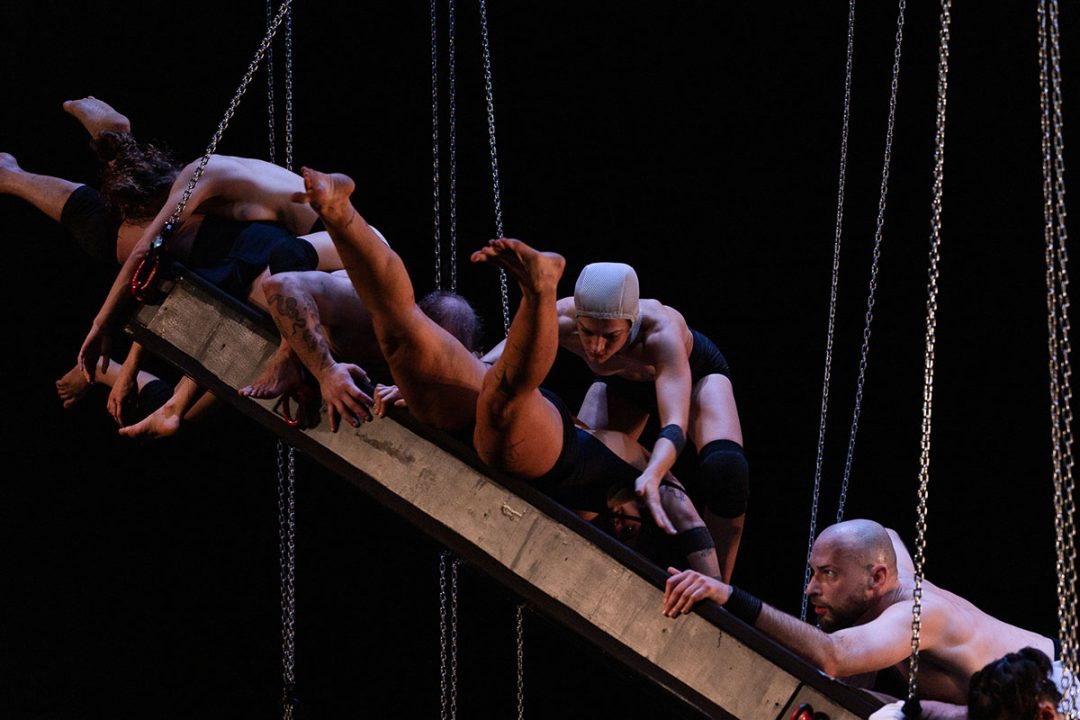
The feel throughout is subterranean and brutal, driven by Gonçalo Alegria’s oppressive score: percussion, shrieks, and metallic stabs pile on top of each other, joined by the clatter of the hoists, pushing well past the point of endurance. What HORNFUCKERS gestures towards however – chaos, revolt, or some unnamed catastrophe – remains a gesture. Is this dread meant to alarm us into something, or is it simply the aesthetic Niepce favours? And if it’s the latter, is it worth the gripping anxiety it leaves the audience with? —EB
Kasia Wolińska: Phoenix.Sun
Kasia Wolińska’s Phoenix.Sun opens on the floor of St. Elisabeth-Kirche, the audience seated along both sides of a long stage. Her initial gestures carry the austerity of prayer: face buried in her palms, or gaze turned upward, arms crossed overhead as if bracing against an unseen menace. Heinali’s live score, dense and granular, gradually pulls her from stillness. Suddenly, side jumps splinter the space and arms sweep wide, teasing a narrative that Wolińska quietly refuses to deliver. Instead, a run of quick steps stalls mid-phrase, holds a moment of doubt, then dissolves into a spin or a slow unfurling of the arms. Drawing on the medieval monophony of Hildegard von Bingen, the solo takes on a similar chant-like rhythm: a single impulse or intention stretches thin across repeating cycles, evoking a body reaching for something beyond its grasp.
Rather than being swallowed by the high vaults, Wolińska uses the church’s scale as an amplifier. Stark white light bursts through the smoke pooled under the high vault, cued to a sudden sidestep or a low squat, shocking the room out of its trance. On flanking screens, Denis Kozerawski’s video projections – stills of birds, sculptures, stars and abstract shapes – drift past without resolving into a clear message, adding texture and perspective rather than illustration.
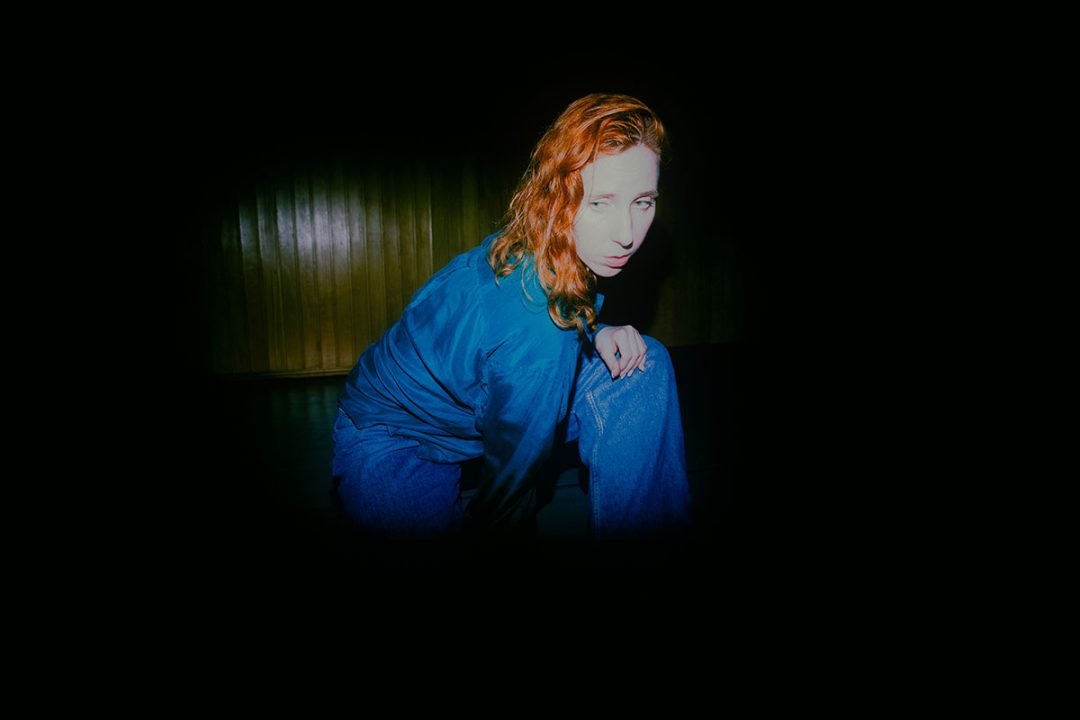
It’s a delicate setup, but Wolińska pulls it off with a presence that feels hyper-focused yet strangely distant. She collapses to the floor as if resisting a current only she can feel, then rekindles, crossing the church in long, hopscotch strides. Every movement leaves behind a shadow of uncertainty, framing the next like a cinematic still. In a festival crowded with shows eager to explain themselves, Phoenix.Sun is a rare and refreshing return to ambiguity. It is abstract, unhurried, and generous enough to leave you lighter than it found you. —EB
Calixto Neto: Bruits Marrons
Julius Eastman’s post-minimalist compositions were largely forgotten until the late 2010s. He died in 1990, homeless and alone after a rocky career cut short by the pervasive racism and homophobia of the academic music world – reportedly telling his nurse he had no family and no friends. For a man who died in such isolation, there is no better tribute than a celebration of what he was denied: the simple, radical act of staying together as a chosen family. Calixto Neto’s subtle homage to Eastman split the audience, but proved to be the most moving experience of the festival.
Six performers open the show with personal stories, told plainly facing the audience: typecasting in classical music, the crushed Congolese independence movement, the Maroon communities hiding in Réunion’s volcanic calderas. They huddle around a piano, the ‘black beast’ as one of them calls it, pluck a few notes, and drift into movement: hip sways, arms up, like nobody’s watching.
Much of Bruits Marrons reads as an archive of everyday togetherness – dancing, sleeping, eating, caressing, whistling; small, unremarkable acts of care. Hands stay linked. Bodies curve into a shivering line or circle, moving like a single organism wired entirely through touch. When a long dinner scene unfolds far upstage, with performers turning their backs to crack jokes, the audience splits: a few walk out, some applaud out of spite as if annoyed at being denied a show. This irritation gets right to the core of Eastman’s tragedy: what do white audiences expect from Black performers on stage? Entertainment, trauma, effortless virtuosity? Exactly the same expectations that wore Eastman down and chased him into solitude.
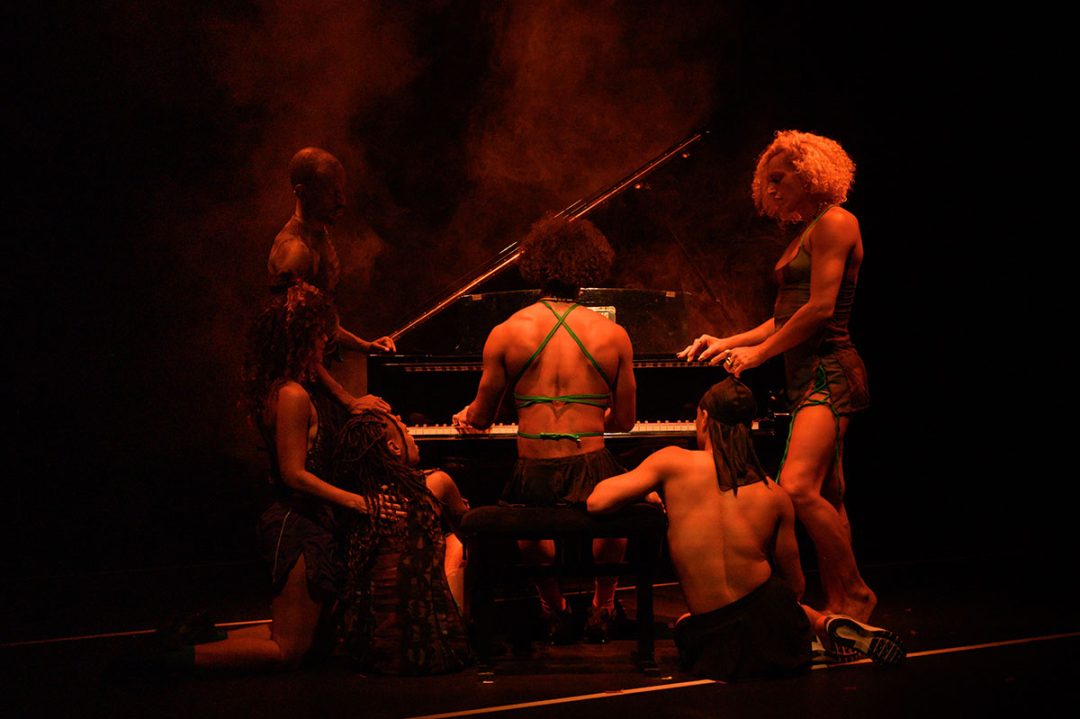
The tension ultimately breaks when a performer sits to play Evil Nigger, Eastman’s most ferocious score. The others stagger under the weight of clustered notes, catching each other and collapsing repeatedly, caught up in a sonic whirlwind. When the smoke begins to lift off the piano the group abandons their pairings to gather around the pianist, try a few soft notes and freeze into the embrace of a family portrait. It is a devastating final image. Walking a razor-thin line between raw lived experience and performativity, Neto’s cast stumbles more than once. But in a show that holds fiercely to its premise without overreaching, it’s those stumbles, more than anything staged, that get under the skin. —EB
13–29.08.2026, Berlin, Germany