

Torino, once the capital of the Italian Kingdom, hosted the tenth edition of NID – New Italian Dance (1–4 September 2026), a platform dedicated to promoting Italian dance artists abroad and fostering international artistic and cultural exchange. A constellation of regenerated spaces across Torino and its outskirts – including the former psychiatric spaces of Lavanderia a Vapore, the industrial archeologies of Fonderie Limone and Officine Grandi Riparazioni (OGR), and the art deco cinema converted into Teatro Astra – offered more than an aesthetically compelling backdrop. These venues proved well suited to the selected works, many further enriched by the genius loci of these places, infiltrating and shaping their choreographic atmospheres.
The curatorial aim was a panorama of the current Italian dance scene under the theme ‘Choreographies of the Possible’. Does this imply that the works inhabit the safer territory of what is choreographically possible, or that they open new possibilities beyond the encounter with NID? Possibly both. Every work emerges within limitations that artists must navigate, while its encounter with a spectator can activate new possibilities of affect.
From a choreographic palimpsest comprising 20 works – 14 in the official selection, two guest productions and four works-in-progress seeking further support – four tendencies emerged as lenses through which to read the panorama proposed by NID 2026: creating hybrid movement languages, performing the archive, tracing a multi-layered portrait of women, and suspending disbelief through magic.
Hybrid movement languages
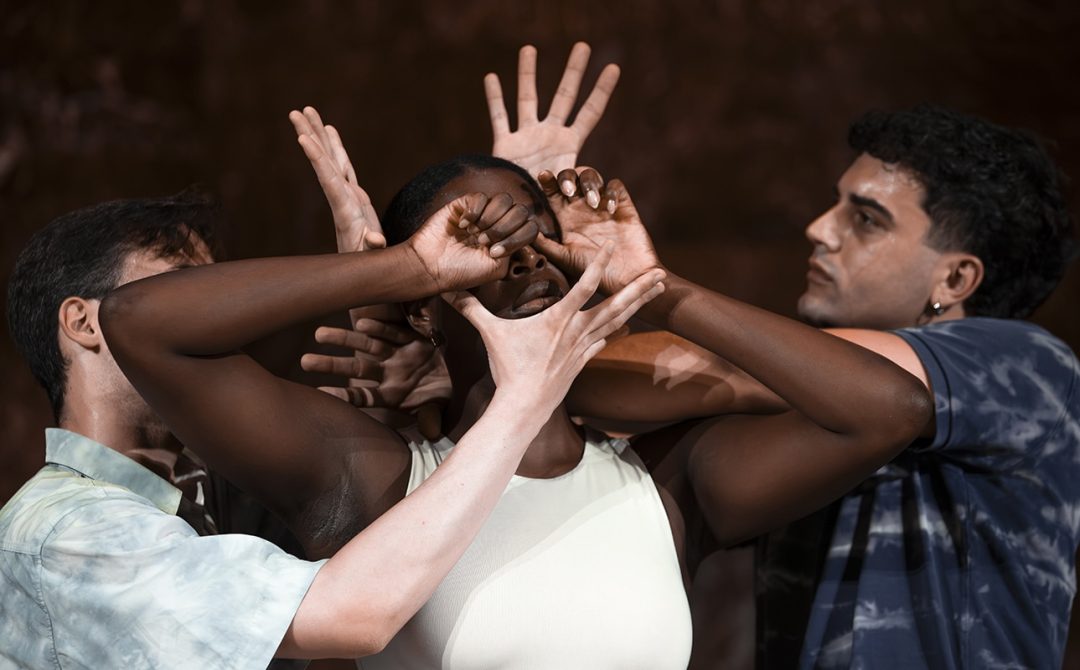
The refined choreography of Manifestus by Jacopo Jenna, in collaboration with Mattia Quintavalle / SLY, is designed to move the spectator kinaesthetically – at least, I caught myself moving my spine, mirroring the dancers’ joy in every little segment of movement, and undoubtedly I was not the only one. Jenna works creatively with found objects and forms, and Manifestus is no exception. Fusing street dance and its distinct dynamics, body fragmentations and two-dimensional hieroglyphics with the imaginary potential of hand gestures, the work becomes a journey in visual pleasure, connecting bodies and energies in the here and now. The hand is the primary motor of its visual and choreographic complexity. Entanglements of gestures create hand chains extending from the head, transforming bodies into imaginary creatures. The hand sculpts space and betrays the body, resignifying its essence in front of the arches of OGR crowned with light, where trains were once stationed for repair works. Geometric lines and angles compose frames made of flesh, while the austere, controlled choreography gradually gives way to the impulse of Alberto Ricca / Bienoise’s music, unfolding into wavy and snaky movements. The trio’s range of skin colours opens the otherwise predominantly white space of contemporary dance to gently embrace blackness and street dance. This harmonious human symbiosis is one of Manifestus’s strongest aspects, rendering tangible the connection between the aesthetic and the political.
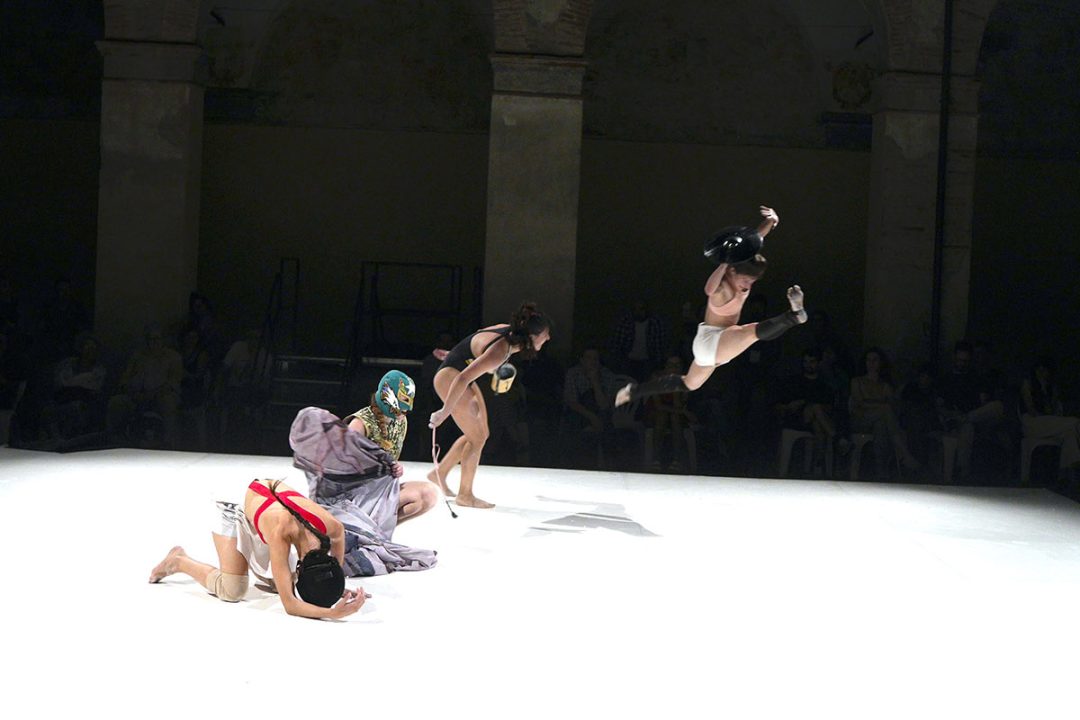
Inspired by an ancient Roman mosaic found in Sicily depicting female athletes, Le Palestriti by Simona Bertozzi develops a distinctive movement language rooted in sport and enriched through the sensibility of dance, a quality that permeates both Bertozzi’s artistic and community-based work. Four female dancers embody the postures and movement repertoires of various disciplines – swimming, weightlifting, wrestling, riding, fencing and hurdling among them – rigorously rehearsing their movements until they become a dense choreographic tissue inhabiting the realm of dance. In a silence that activates the senses, competition softens; individuality and collectivity transmit the spirit of solo and team sports. Gym chalk spreads its magic across the bodies in moments of exhilaration and celebration, while the patina of time on the industrial building of OGR enters into dialogue with the present through the moving bodies and the silk fabric bearing the printed image of the mosaic. Le Palestriti is a choreographic ode to female power and strength, combining athletic determination with the fluidity of dance in an encounter where togetherness and solidarity can thrive, and victory and defeat become part of the same experience.
If life is indeed an endless race, then Andrea Costanzo Martini’s Pas De Cheval, a duet with Francesca Foscarini, offers every reason to empathise. Embodying the horse as convincingly as possible – tight fists close to the body, a horse-like gaze with eyes fully open, a painfully tensed jaw, long ponytails and galloping – the two artists critique the contemporary dance system from within through mental and physical exhaustion. The precise and virtuosic choreography, characteristic of Martini’s work, is accompanied by an intimate recorded dialogue capturing the lives and concerns of today’s dance artists: how to pitch a new project, navigate persistent precarity, and secure retirement and health insurance. When Foscarini, mounted on Martini, gazes downstage while he walks in place with his head bowed, the piece concludes with a corporeal image that opens onto different trajectories: past and future versus the present; action versus passivity. Honest, bittersweet, ironic and hilarious, Pas De Cheval is intrinsically pragmatic, winning over the spectator through the lure of mature bodies and the performance of friendship and solidarity on stage.
Performing the archive
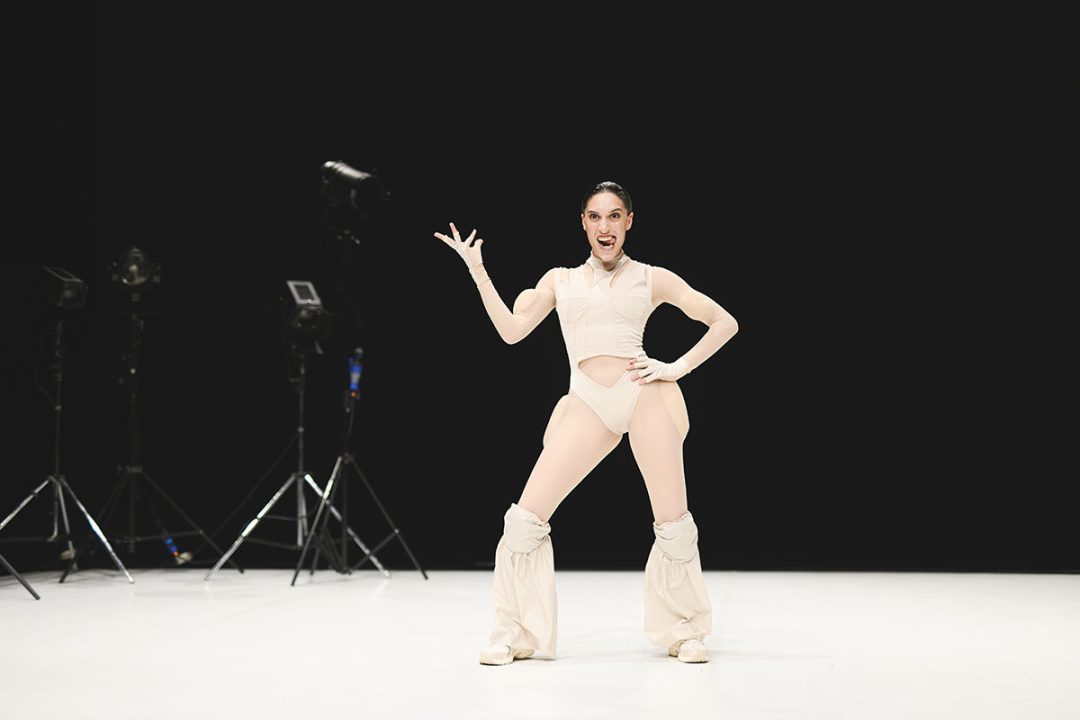
Good Vibes Only (the great effort) by Francesca Santamaria, the youngest choreographer in this year’s NID, uses screen scrolling as a choreographic device for a duet between a human algorithm and a social platform. The algorithm, in t-shirt declaring him as having a ‘dominant gaze’, is embodied by a DJ on stage who mixes fragments of popular songs and well-known compositions associated with video clips and choreographies from the dance canon. A reference to Jérôme Bel’s Shirtology dialogues with Maurice Béjart’s Boléro, Beyoncé’s voice, the recorded dictation of a ballet exercise and Pina Bausch’s Nelken Line, among others. Armed with glass skin, hip padding and bell-shaped leg warmers, Santamaria responds with acute stylistic precision, embodying a choreographic archive that unfolds on stage and activates our collective memory. The imposed perfection of the female body is gradually deconstructed as screen burnout sets in: the glass skin peels away and exhaustion infiltrates the performance. Playful, witty, and powered by Santamaria’s versatile performance, the work culminates in a bitter and questionable ending that perhaps overshadows its scrolling-algorithm theme and shifts the focus towards gender inequality, manipulation and female oppression.
Breathing Room – Atlante dei respiri ricevuti (guest production) by Salvo Lombardo, an artist with strong conceptual foundations, rests on the simple idea of creating space and time to breathe together – a gift during this year’s packed and widespread programme. Based on real-time composition, the performers receive live audio directions privately through their earpieces, while the surrounding audience listens to a recorded text written by Lombardo. Our proximity to the performers, their shared intimacy and heightened presence, all centred on listening, make us feel integral to the work. Resting, walking and sitting are not isolated actions but positions and gestures in search of connection, carrying their own political weight in a time of segregation and division. Within an emotionally dense atmosphere held together by Lombardo’s calm, soft voice, a diverse and intergenerational human landscape emerges: dance artists whose names already exist in the pages of the Italian dance history books co-exist in the flesh with emerging and mid-career artists. ‘A living archive,’ one spectator said – and it could not have been a more accurate response.
Connecting a theatre script and physical language remains one of the most challenging endeavours in contemporary dance. The question becomes even more intriguing when the script is a Greek tragedy – here, Euripides’ The Phoenician Women, a textual archive par excellence brought to the stage by Balletto Civile, a company committed to making dance a civil matter. Rooted in embodied storytelling, one of the most essential takeaways of this restaging is its capacity to awaken empathy for the pain of the other. Could this feeling be an antidote to today’s cruelty?
Female portraits
Epiphania. Mi rendo manifesta by Michele Abbondanza and Antonella Bertoni, an artistic duo that has been shaping dance-theatre in Italy for approximately 30 years, offers a gaze on the condition of being a woman. Legs, long hair and red lips are intelligently isolated from the rest of the bodies of three female performers; the white skin of their fragmented bodies strongly contrasting with the blackness of the surrounding curtains. A female wig slowly meets the other half of the body; an egg resting on a woman’s knees drops onto a table with female legs. Yet the more the female body abandons fragmentation and is recomposed on stage to reveal and manifest itself, the more violently it is represented: a corpse-like body inside a transparent plastic bag; doll-like women with bands attached to the sensory parts of their faces (eyes, mouth, nose). Collage-like surrealistic scenes evoke fetishisation of the female body, desire, pleasure, motherhood, unfulfilled pregnancy, birth and housekeeping, gradually deconstructing sensuality to make space for femicide and censorship. Epiphania is imaginative in its representation of women and the female body – although it clearly excludes the trans body. Its blunt cruelty, which ultimately turns woman into victim, is also a call for action.
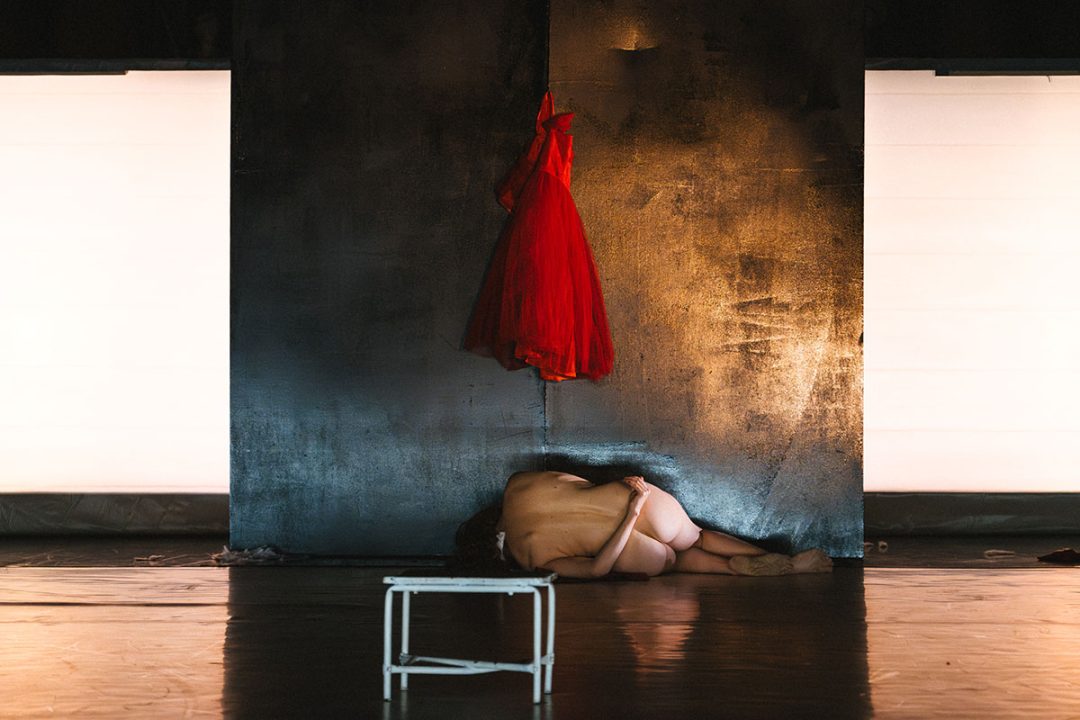
One of the most sensitive works was the third part of a trilogy dedicated to women artists by Alessandra Cristiani, another significant figure in the history of contemporary dance (particularly butoh) in Italy. Caduta da neve is inspired by fashion photographer Sarah Moon and unfolds as a melancholic choreographic poem portraying a human dimension often associated with weakness: emotionality. Throughout, the minute hand of a rusty clock ticks relentlessly in real time. In the nude stage of Teatro Astra, Cristiani constructs with modesty a pregnant spatio-temporal experience, incorporating waiting, folding and unfolding her naked body through subtle movements in an attempt to tame time. She moves around a vertical wall, appearing each time with a new accessory – a pair of gloves, a red dress. When she loses patience, she unexpectedly and violently breaks the clock with a piece of iron; its torturous ticking becomes a heartbeat, while invisible snowflakes give the impression of touching her body. Caduta da neve is dedicated to waiting, transforming it into strength and power through the courageous exposure of fragility.
Yes to… ‘magic and make believe’
In Abracadabra, Francesca Pennini and her CollectivO CineticO, a company that audaciously expands the limits of choreography, invite us to believe that sometimes all we need in life is a little magic. Plunged into darkness, Penini’s voice raises metaphysical questions about the nature of reality and Schrödinger’s cat experiment on the superposition of states. ‘Are we aware of our body in the dreams of others?’ she asks, leading a meditation session to tune our bodies to our thoughts – until the stage opens to reveal a box with a human voice. Partner in crime Angelo Pedroni lip-syncs to the same female voice, and large bubbles perform their own choreography. A memory sequence gives way to Penini’s autobiographical story of encountering death and surviving until she transforms into a black chicken. Strangeness, subtle humour and darkness are the ingredients of this magic spell, conceived to convey the idea that miracles happen every time an ending arrives, giving birth to a new beginning. A whimsical work, Abracadabra cultivates the little hope that burns within us, perpetuating life, thought and energy through transformation and metamorphosis. Some religions call it transubstantiation or metempsychosis. CollettivO CineticO uses a single word: abracadabra!
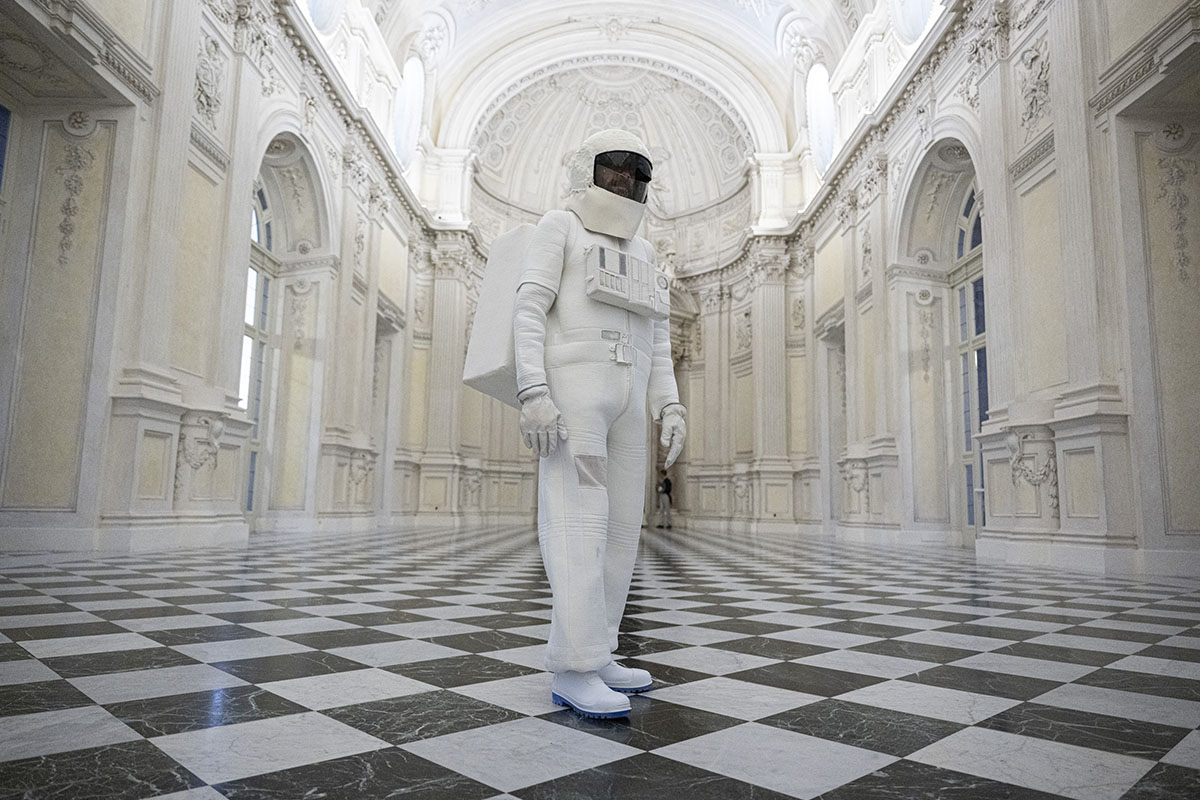
Speaking of magic, suddenly seeing an astronaut walking through a crowded room – in this case, the Royal Palace of Venaria – needs no further explanation. This is The Second Paradox of Zenon (guest production) by Elisabetta Consonni, an exponent of expanded choreography, who explores the human species while reminding us of the absurdity of our world. The astronaut is a space shipwrecked figure who has fallen from the skies and is searching for his way on Earth, disrupting ordinary – and since he is in a palace, extraordinary – space and time with his unconventional presence.
All these works, extracted from a dense programme, speak to and move audiences, local and international, public and professional, in different ways. With the machinery for the upcoming NID, to be hosted in Rome towards the end of April 2027, already steaming ahead, will the selected works be able to find their place in the international field? Or will the upcoming, tightly scheduled NID already shift attention away, displacing these works before they have had a chance to circulate? Artists and audiences remain in need of ‘choreographies’ that activate relations and foreground possibilities. Otherwise, what remains of ‘Choreographies of the Possible’? ●
1–4.09.2026, Torino, Italy