

The first thing you notice when arriving at Rabbit/Duck Festival in Gothenburg, Sweden, is its surrounding environment: located in an industrial harbour, you are faced with hundreds of shipping containers, Gothenburg’s massive river and Eriksberg’s shipbuilding past. It is in an overlooking warehouse compound where the annual interdisciplinary art festival takes place. Produced by No Deadline, consisting of choreographers Toby Kassell and Ingeborg Zackariassen, Rabbit/Duck compiles diverse performances from visual art to music to dance over the course of two nights.
Now in its fourth year, Rabbit/Duck offers an unusual programme combining the small scale and fringe with internationally renowned performers. To find out its backstory, I sat down with Kassell and Zackariassen a week before the festival to ask about how Rabbit/Duck came about and how it is sustained.
No Deadline was created in 2019, as an umbrella to operate under, as ‘something bigger, thinking beyond deadlines,’ Zackariassen explains. ‘Carving out time and space for ourselves just to resist the borders that always surround project-based production models.’ Kassell adds, ‘We were very interested in working on the intersection between choreography and sound originally, but in the categorisation of funding, we kind of fell between the gaps.’ Their cross-disciplinary approach underlies the diverse nature of Rabbit/Duck.
Both Kassell and Zackariassen worked as dancers at the Gothenburg Opera for over a decade, and when receiving their first proper funding in 2023 after leaving, they decided to create the first edition of Rabbit/Duck. ‘We stepped out of the Gothenburg Opera, which is now one of the biggest, most famous institutional companies in the world, and we wanted to be able to give something back to the city – not to counter the opera, but to offer something else,’ says Kassell.
How do they approach shaping their festival? ‘With a choreographic eye,’ he says. ‘We see it as a tapestry, much like how we would weave together scenes or movements in a piece.’ Zackariassen continues, ‘We’ve always been interested in challenging the traditional meeting with the audience. How can we create a social and open meeting space where art is a natural part of it?’
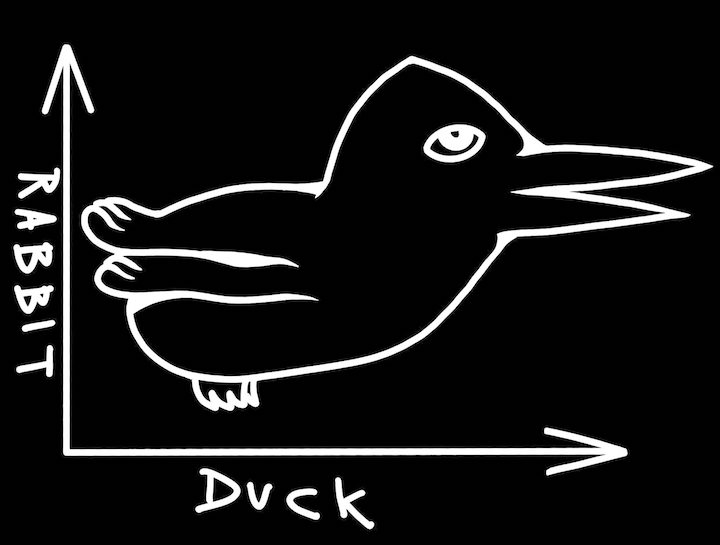
The festival takes its name from an ambiguous image of both a rabbit and duck, made famous by philosopher Ludwig Wittgenstein. Kassell elaborates: ‘When we position certain works together, it creates a new perspective about things. The idea is to expose people to things that they wouldn’t usually see and put it back to back with something maybe they would usually see.’
Hence the diverse lineup of performance, from Tom Cassani’s meta-magic performance to Y-Otis’ liquid jazz band. The bridging of art forms is a vital goal for Rabbit/Duck, with each year including a creation between a visual artist and choreographer. Moreover, at least one or two creations in the festival are site-specific, with this year’s festival commissioning unique pieces from the duo LEE\VAKULYA, as well as a collaboration between Brazilians Cristian Duarte and Bianca Hisse. As Zackariassen describes it, ‘We give them a carte blanche, which is unusual. Artists typically have to fit into a theme, or there are certain caveats. The only caveats we have are our space and our lack of resources.’
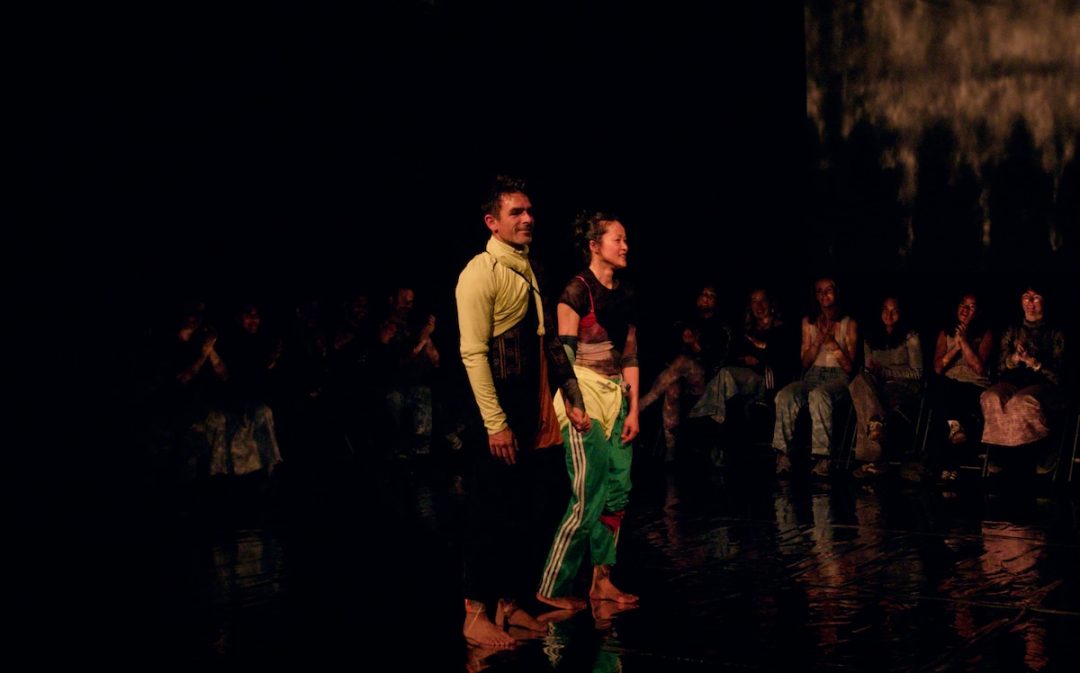
But what does it take to get international artists to a smaller festival like Rabbit/Duck? Kassell is gung-ho: ‘I find someone that I’m interested in, find some money, and I’ll go out there. I will meet them, spend some time with them, and try to convince them to come to the festival. Until now, everyone has said yes.’ The approach gets results: this year’s festival includes artists from Brazil to Berlin.
Since 2023 Rabbit/Duck has received funding from the the City of Gothenburg, while other funding sources are not always guaranteed. ‘As you know, the cuts to arts funding have hit the independent scene hard,’ Zackariassen states, ‘To cover what Västra Götalandsregionen (the region) didn’t fund this year, we managed to secure funding from Riksteatern Väst and Konstnärsnämnden. And this year we got funding from the Swedish Culture Council for the first time… In other words it’s patchwork to make it all happen, and we’re crossing our fingers between each funding application.’
Organising an ambitious festival like Rabbit/Duck isn’t easy. Zackariassen admits, ‘Of course it’s stressful to be only two people. I don’t know how many roles we fulfil to do a festival like this, but it’s more than two people can actually manage. We don’t sleep very much at the moment!’
Arriving on the first day of Rabbit/Duck, the environment feels quite the opposite of stressed: cosy, inviting and relaxed. I walk through the bare warehouse-converted-theatre, filled with bundles of cords, raw wood, and metal pipes along the walls and make my way into the bar area. An old storage room is filled with carpets, couches, zines and most importantly: cheap drinks. It’s easy to notice the diversity of those around me, both in age and style.
Soon enough the festival kicks off with Inventory of Goodbyes, the commissioned collaborative performance from Bianca Hisse and Cristian Duarte. Both renowned artists from Brazil, with Hisse now based in Oslo, it is curious how they ended up at Rabbit/Duck. The night before the festival started, I had a chance to chat with them about it.
Although both are from São Paulo, they hadn’t actually worked together before; it was Kassell who had proposed a collaboration between them. What made them say yes? Hisse replies: ‘I think it’s very rare to be given so much space to create. Basically, we could propose anything.’ Duarte adds, ‘It was a process of building in dialogue with the festival, with Toby and Ingeborg. With the level of listening from both sides to understand our ideas, I realised, okay, they want this. So I’m on the right track because I also want that. I don’t remember if I ever had that with any other festival, that you build something together.’
‘
I can’t help but notice an openness, intimacy and generosity that the environment catalyses.
Their performance is inspired by the industrial location of Rabbit/Duck. ‘What really caught my attention,’ says Hisse, ‘was the surroundings. Outside with the containers, the shipyard.’ Duarte continues, ‘It was this harbour – a place where things arrive and leave. We were looking into the poetry of those things, in terms of hopes and relationships. We made connections to borders, immigration, what you leave behind and what you encounter. How to let go of things.’
Notably, Hisse and Duarte use a dozen local performers in their piece. ‘It was important for them to experience a little bit of our universe,’ Duarte notes, ‘The planet we are dealing with.’ Hisse chimes in: ‘It was important that they are not just making volume. They’re part of the city, they’re part of this context.’
With the local performers being transported in a massive shipping container from the outside midway through the performance, the shipping container remained in the space after the performance. Converted into a seating platform, it made the rest of the festival feel alive with the traces left behind.
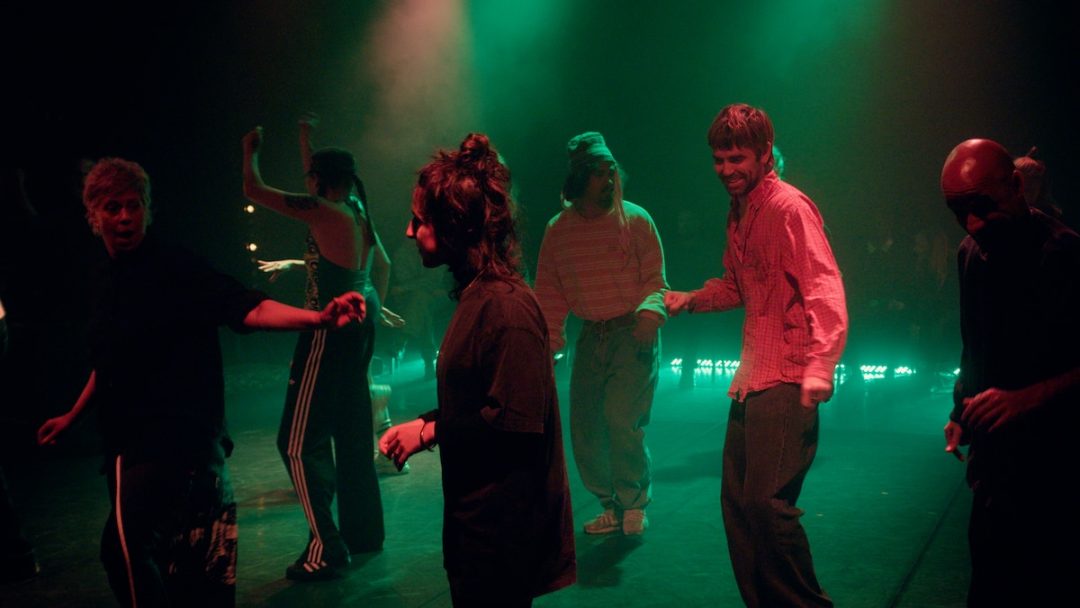
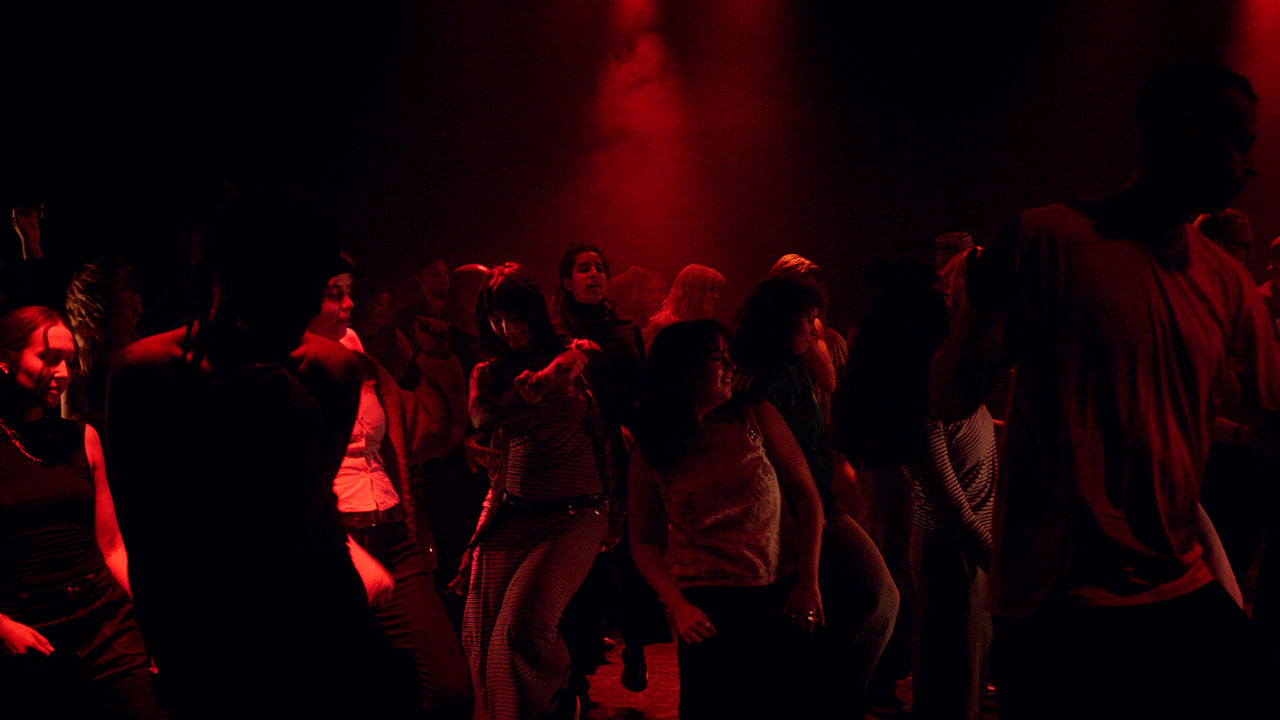
The night continued energetically with the space constantly transforming to adapt to each performance, challenging the way audiences met with each work. The impermanence of the site-specific performances and shifting stages of chairs and carpets proved the beauty in the fleeting and the aliveness in blurring where the stage ends. From witnessing two works blending physical theatre, music and dance by UK duo Matteo Fargion and Jonathan Burrows, to Brussels-based Taiwanese/Hungarian duo LEE\VAKULYA’s poetic duet mixing John Berger with excessive layers of clothing, the festival offers a unique experience by expanding one’s horizons whilst defying the traditional meeting between audiences and art. Even the stage becomes a dance floor, with Maria Naidu’s On and on and on on and on where the audience is mobilised into the electric slide dance, directly followed by a playful club set from DJ Maele ‘Cheza’ Sabuni.
‘
It feels close, a little more close to the craft, close to the artist.’
In between performances I find myself in conversation with different crowds of people: students, participants in Hisse and Duarte’s work, and even the other artists performing. I can’t help but notice an openness, intimacy and generosity that the environment catalyses.
In trying to pinpoint how this happens, I’m reminded of something Hisse said: ‘There’s something about smaller experimental venues in bringing to the forefront some newer ideas or ways of doing things that are not seen and that are needed, that are lacking. They open up new ways of operating that can then be taken forward and you encounter the audience in a different way, a different kind of access that you don’t get in the bigger festivals and institutions.’ Duarte adds: ‘It’s more intimate, more attentive, more down to earth. It feels close, a little more close to the craft, close to the artist.’
After two eclectic days at Rabbit/Duck, I’m left wondering what ingredients create this symbiotic experience for the artists and the audience. The festival lends itself to so much risk and unknown in its devout commitment to artistic freedom that, despite limited resources, in turn generates authentic opportunities of connection for everyone involved. Like planting a seed, Rabbit/Duck leaves space for the honest emergence of both the new and the unexpected. Something finally human. ●
9–10.10.2026, Gothenburg, Sweden